
What's Happening?
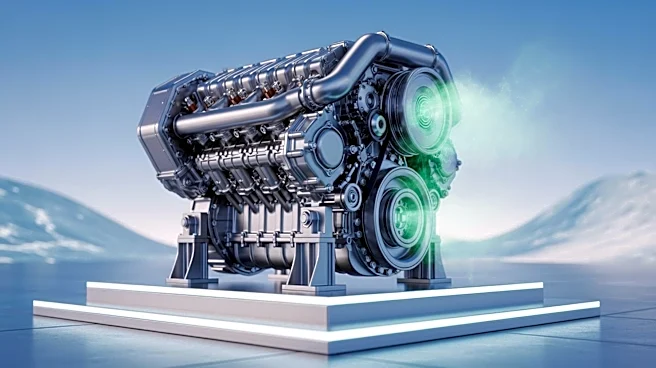
Everllence has announced the successful factory acceptance test of its first ammonia-burning engine, built by Hyundai Heavy Industries in South Korea. The dual-fuel engine, known as the Everllence B&W
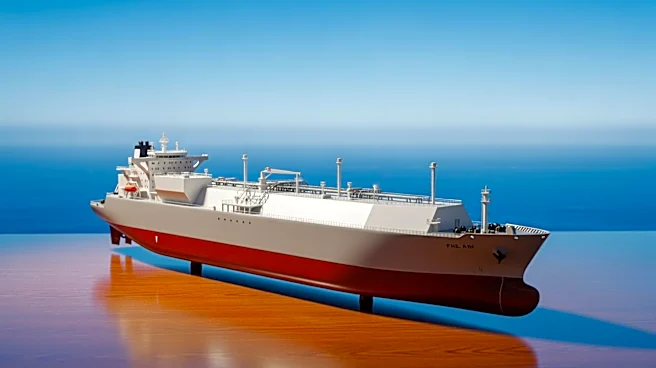
6G60ME-LGIA, is designed for a vessel under construction for Eastern Pacific Shipping. This engine is equipped with High Pressure Selective Catalytic Reduction technology and is set to be installed in the first very large ammonia carrier, scheduled for delivery in October 2026. Ole Pyndt Hansen, Senior Vice President at Everllence, highlighted the engine's potential to set new benchmarks in zero-carbon propulsion. The engine's development has attracted significant interest due to its innovative approach to zero-carbon shipping.
Why It's Important?
The successful testing of the Everllence ammonia engine marks a significant step towards zero-carbon shipping, a critical goal for the maritime industry as it seeks to reduce its environmental impact. The introduction of ammonia as a fuel could revolutionize shipping by providing a cleaner alternative to traditional fossil fuels. This development aligns with global efforts to combat climate change and reduce greenhouse gas emissions. The maritime industry, which is a significant contributor to global emissions, stands to benefit from such innovations, potentially leading to regulatory changes and increased investment in sustainable technologies.
What's Next?
The next steps involve the commercial debut of the Everllence ammonia engine, with the first vessel equipped with this technology expected to be operational by late 2026. As the engine moves from testing to real-world application, it will be crucial to monitor its performance and impact on shipping operations. The success of this engine could encourage other companies to invest in similar technologies, potentially leading to widespread adoption of ammonia as a maritime fuel. Stakeholders, including shipping companies and environmental groups, will likely watch closely to assess the engine's effectiveness and environmental benefits.