



What's Happening?
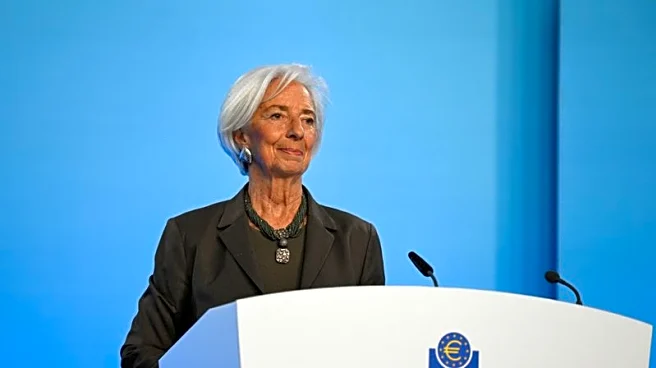
The European Central Bank (ECB) is set to outline proposals aimed at simplifying bank capital rules, which were established following the 2008 financial crisis. The recommendations include merging banks' risk buffers to reduce the complexity of the current regulatory framework. This initiative comes at a time when the market for contingent convertible (CoCo) bonds, a type of hybrid bank debt, is experiencing high demand. The ECB's proposals are part of a broader effort to ensure that CoCo bonds effectively absorb losses before a bank reaches the point of failure. The recommendations will need approval from the European Commission and subsequent legislative action, a process that could take several years.
Why It's Important?
The ECB's move to simplify bank capital
rules is significant as it addresses the challenges faced by financial institutions in managing complex regulatory requirements. The high demand for CoCo bonds presents an opportunity to reform these securities, ensuring they function as intended during financial crises. Simplifying capital rules could enhance the stability of the banking sector by making it easier for banks to build capital buffers. This, in turn, could reduce the likelihood of government bailouts in future crises. The proposed changes reflect a proactive approach by European regulators to strengthen the financial system and protect investors.
What's Next?
The ECB's proposals will undergo a review process by the European Commission, followed by legislative action. This process is expected to take several years, during which time the market for CoCo bonds may continue to evolve. Financial institutions and investors will be closely monitoring the developments, as the proposed changes could impact the yields and attractiveness of CoCo bonds. The ECB's recommendations may also influence regulatory approaches in other regions, prompting a global reassessment of bank capital rules. The outcome of this initiative could lead to a more resilient banking sector, better equipped to handle future financial challenges.