









What's Happening?
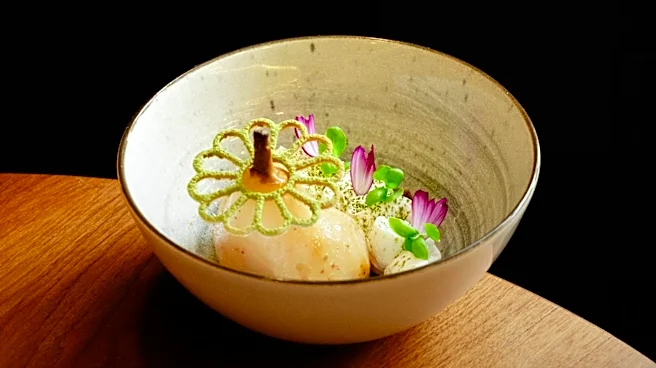
Chef Raz Shabtai, originally from Jerusalem, has made history by earning a Michelin star for his kosher restaurant, Mutra, located in Miami. This achievement marks the first time a kosher restaurant has received such an honor, placing it among the world's
most prestigious culinary circles. Shabtai, who began his culinary journey at the age of 13, has worked in various kitchens and opened Mutra a year and a half ago. The restaurant, named after his grandmother, serves Middle Eastern cuisine using a farm-to-table model. Shabtai's journey to this accolade involved a personal transformation, where he embraced kosher food as part of his identity, despite not being religious. The recognition from Michelin is seen by Shabtai as a symbol of excellence and consistency, and he aims to provide guests with an exceptional dining experience.
Why It's Important?
The awarding of a Michelin star to a kosher restaurant is significant as it challenges the traditional perceptions of kosher cuisine, elevating it to the highest levels of culinary excellence. This recognition not only highlights the quality and innovation within kosher cooking but also promotes cultural diversity in the culinary world. For Miami, a city known for its vibrant and diverse food scene, this achievement enhances its reputation as a destination for high-quality dining experiences. It also reflects positively on the Jewish community, showcasing acceptance and integration within the broader society. The success of Mutra could inspire other kosher establishments to strive for similar recognition, potentially expanding the market for kosher dining options.
What's Next?
Following this achievement, Chef Raz Shabtai may experience increased interest and patronage at Mutra, potentially leading to expansion opportunities or collaborations with other chefs and culinary experts. The Michelin star could attract food enthusiasts and critics, further solidifying Miami's status as a culinary hotspot. Shabtai's success might encourage other chefs to explore kosher cuisine, leading to a broader acceptance and appreciation of its unique offerings. Additionally, the restaurant's recognition could spark discussions on the role of cultural and religious identity in the culinary arts, influencing future trends in the industry.
Beyond the Headlines
The recognition of Mutra as a Michelin-starred restaurant underscores the evolving landscape of the culinary world, where traditional boundaries are being redefined. It highlights the potential for kosher cuisine to be appreciated on a global scale, challenging stereotypes and promoting inclusivity. This development may also have ethical implications, encouraging chefs to consider the cultural significance of their culinary practices. Furthermore, it could lead to increased interest in Middle Eastern flavors and farm-to-table models, promoting sustainable and culturally rich dining experiences.