


What's Happening?
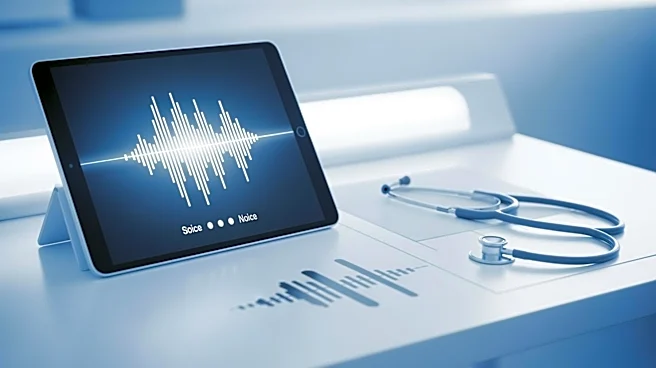
Commure, a platform specializing in revenue cycle and clinical AI, has launched a new tool called Commure Dictation. This AI-powered 'speech-to-cursor' extension is designed to enhance clinical workflows by allowing healthcare professionals to use their
smartphones as wireless microphones. The tool eliminates the need for expensive, dedicated dictation hardware, enabling clinicians to dictate complex clinical notes, send messages, and draft referrals without switching applications. Commure Dictation features Contextual AI Editing, which allows doctors to speak instructions that the AI then structures and fills into templates automatically. This innovation ensures that data entering electronic health records (EHR) is highly structured and optimized for downstream systems, enhancing the efficiency of revenue cycle operations.
Why It's Important?
The introduction of Commure Dictation is significant as it addresses the inefficiencies associated with legacy dictation systems in healthcare. By providing a cost-effective and streamlined solution, it reduces the dependency on expensive hardware and simplifies the documentation process for clinicians. This tool not only improves the accuracy and speed of data entry into EHRs but also optimizes clinical documentation integrity and revenue cycle operations. As healthcare systems continue to digitize, tools like Commure Dictation are crucial in enhancing operational efficiency and reducing administrative burdens on healthcare providers, ultimately leading to improved patient care and resource management.
What's Next?
As Commure Dictation becomes integrated into more healthcare systems, it is likely to prompt a shift towards more AI-driven solutions in clinical settings. Healthcare providers may increasingly adopt similar technologies to streamline operations and reduce costs. The success of this tool could encourage further innovation in AI applications within healthcare, potentially leading to more comprehensive AI-driven platforms that address various aspects of clinical and administrative workflows. Stakeholders in the healthcare industry, including hospital administrators and IT departments, will need to evaluate the benefits and challenges of integrating such technologies into their existing systems.