








What's Happening?
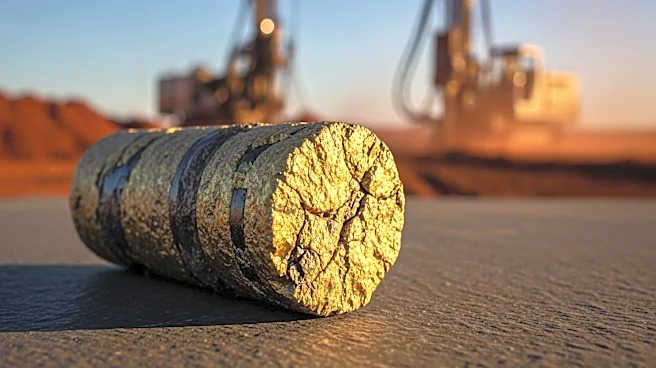
Kalamazoo Resources, an Australian exploration company, has announced the first assay results from its resource definition drilling at the Ashburton Gold Project in Pilbara, Western Australia. The company has completed 16 out of 65 planned drill holes
at the Mt Olympus site as part of a 14,000-meter drilling program. These initial results confirm the continuity of mineralization within the main host sequence, highlighting key areas for resource conversion. Notable high-grade gold intersections include 21 meters at 6.5 grams per tonne from 12 meters and 50 meters at 2.6 grams per tonne from 129 meters. The results also support Kalamazoo's underground growth model, with mineralization confirmed up to 300 meters beneath the conceptual open pit. Executive Director Ben Ackerman expressed optimism about the findings, which validate the existing resource model and suggest potential for converting inferred resources to the indicated category.
Why It's Important?
The assay results are significant for Kalamazoo Resources as they reinforce the company's strategy to expand its gold resource base beyond the current 1.44 million ounces. The confirmation of high-grade mineralization supports the potential for increased production, aligning with Kalamazoo's transition from an explorer to a developer. This development could enhance the company's market position and attract further investment. Additionally, the results may influence the Prefeasibility Study (PFS) for the Ashburton project, potentially leading to more efficient mining operations and increased economic returns. The successful expansion of resources could also have broader implications for the Australian gold mining industry, contributing to regional economic growth and job creation.
What's Next?
Kalamazoo Resources plans to continue releasing assay results as they become available, with an updated mineral resource estimate (MRE) expected in the fourth quarter of 2026. The company is also on track to complete the Prefeasibility Study for the Ashburton project in the first half of 2027. These steps are crucial for advancing the project towards development and production. Stakeholders, including investors and local communities, will be closely monitoring these developments, as they could impact future investment decisions and regional economic planning. The company's focus on reducing drill spacing and targeting specific areas for resource conversion will likely continue to play a key role in its strategic planning.