
What's Happening?
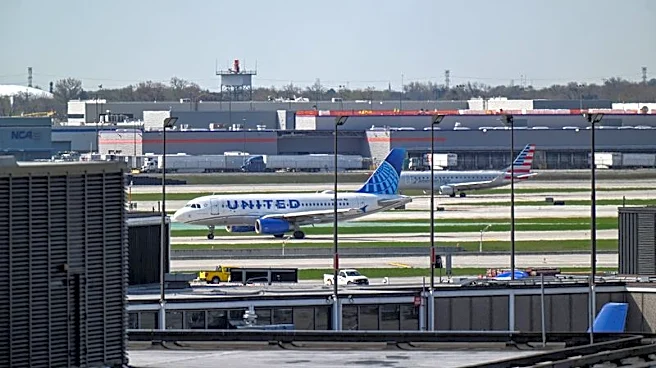
United Airlines has expressed strong opposition to the Federal Aviation Administration's (FAA) decision to impose a cap on the number of daily flights at Chicago O'Hare International Airport. The cap,
set at 2,708 daily flights through October 24, aims to alleviate congestion at the airport. United argues that this decision unfairly favors American Airlines, providing it with a competitive edge at the Midwest hub. The airline claims that the cap will lead to widespread flight cancellations and disrupt travel plans for millions of Americans. United has criticized the FAA's decision-making process as arbitrary and lacking proper analysis, suggesting that the agency failed to consider significant changes in gate allocations that impact airline capacity.
Why It's Important?
The FAA's decision to cap flights at O'Hare has significant implications for the airline industry, particularly for United Airlines, which faces potential operational disruptions and competitive disadvantages. The cap is intended to prevent delays during the busy summer travel season, but United argues it will lead to inefficiencies and flight cancellations. This situation highlights the ongoing competitive dynamics between major airlines at O'Hare, with American Airlines potentially benefiting from the cap. The decision also raises questions about regulatory processes and the balance between competition and congestion management in the aviation sector.
What's Next?
United Airlines is currently reviewing the FAA's order and has withheld further comments until the review is complete. The airline may seek to challenge the decision or propose alternative solutions to address congestion at O'Hare. Meanwhile, American Airlines has expressed satisfaction with the cap, as it aligns with its strategic objectives for operating a successful hub at the airport. The FAA's action is expected to improve reliability and reduce delays for travelers, but the competitive tensions between United and American may continue to evolve as they adjust their operations in response to the cap.