
What's Happening?
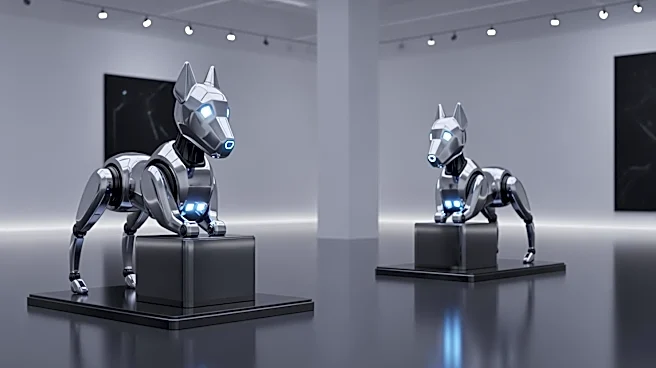
American artist Beeple, known for his digital artwork, has unveiled an interactive installation at Berlin's Neue Nationalgalerie featuring robot dogs with hyper-realistic silicone heads modeled after figures
like Elon Musk and Mark Zuckerberg. These robot dogs, part of the exhibit titled 'Regular Animals,' roam the gallery and produce printed images of their surroundings, transformed by AI to reflect the artistic styles of the figures they represent. The exhibit comments on the influence of technology and algorithms on human perception, suggesting that tech billionaires now shape our worldview in ways similar to how artists like Picasso and Warhol did in the past. The installation was first shown at Art Basel Miami Beach in 2025.
Why It's Important?
Beeple's exhibit underscores the growing impact of technology and AI on society, particularly how algorithms controlled by tech giants influence public perception and information dissemination. This installation serves as a critique of the immense power held by these figures, who can alter algorithms without the need for governmental approval, thus shaping societal views and access to information. The exhibit invites reflection on the ethical implications of such power and the role of art in challenging and interpreting these technological shifts. It highlights the need for public discourse on the balance between technological advancement and its societal impact.
What's Next?
The exhibit is expected to spark discussions on the role of AI and technology in modern society, particularly in cultural and artistic contexts. As museums like the Neue Nationalgalerie continue to showcase works that address these themes, there may be increased public engagement and debate on the ethical responsibilities of tech companies. Additionally, the use of NFTs and digital art in exhibitions like Beeple's could influence future art markets and the integration of technology in artistic expression.
Beyond the Headlines
Beeple's work also touches on the broader implications of digital art and NFTs in the art world. The use of NFTs as a means of authenticating digital art has revolutionized how art is bought and sold, offering new opportunities for artists and collectors. This shift raises questions about the future of art ownership and the role of digital media in preserving cultural heritage. The exhibit's playful yet critical approach to these issues encourages viewers to consider the long-term cultural and economic impacts of digital art and technology.