




What's Happening?
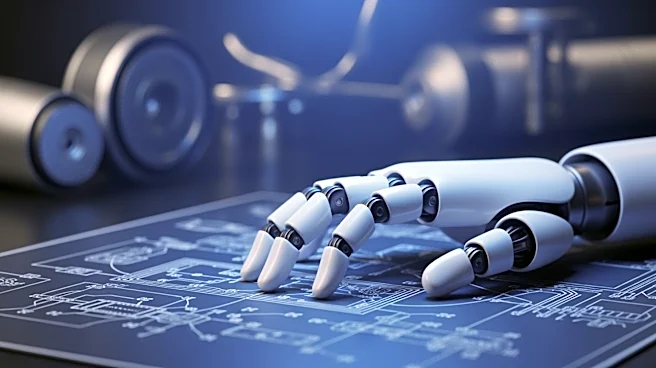
Texas Instruments is addressing the engineering challenges associated with humanoid robots as they transition from research labs to commercial pilots. The company is focusing on 'physical AI' systems that require reliable sensing, decision-making, and
action in real-world environments. German Aguirre, systems manager for robotics at Texas Instruments, highlights the technical gaps between current humanoid prototypes and scalable systems, emphasizing the need for robust perception, deterministic real-time control, and system-level power efficiency. These elements are crucial for achieving reliability at scale, which is necessary for commercial deployment.
Why It's Important?
The development of humanoid robots has significant implications for various industries, including manufacturing, healthcare, and service sectors. Reliable humanoid robots can enhance productivity and safety by performing tasks that are dangerous or repetitive for humans. Texas Instruments' focus on foundational technologies like semiconductors and control systems is essential for overcoming current limitations in humanoid robotics. As these robots become more reliable and scalable, they could revolutionize automation, leading to increased efficiency and new applications across industries.
What's Next?
Texas Instruments is working towards achieving milestones that will enable humanoid robots to transition from prototypes to everyday use. These include reliable task execution, all-day operation, and cost-effective scalable architectures. The company is committed to providing the necessary semiconductors and system-level solutions to support this transition. As these milestones are reached, humanoid robots are expected to see broader deployment in industrial and commercial settings.