







What's Happening?
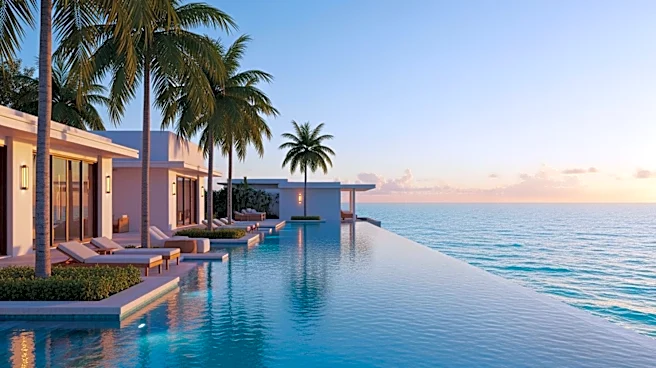
The hospitality industry is increasingly focusing on wellness-centric design to enhance guest experiences. This approach integrates elements such as natural light, strategic spatial layouts, and the use of honest materials to create environments that
promote relaxation and well-being. Hotels are designing spaces that seamlessly blend fitness and wellness into the guest experience, with features like rooftop studios, shaded walkways, and wellness technology that feels like part of the service. The Global Wellness Institute reports that wellness travelers spend significantly more than average tourists, highlighting the economic potential of this trend.
Why It's Important?
The shift towards wellness-focused design in hospitality reflects a growing consumer demand for experiences that support health and well-being. This trend is not only enhancing guest satisfaction but also driving economic benefits for the industry. Hotels that prioritize wellness facilities are seeing higher guest-satisfaction scores and increased loyalty. As wellness tourism is projected to reach $1.4 trillion by 2027, properties that invest in wellness-centric design are positioning themselves to capture a larger share of this lucrative market. This approach also aligns with broader societal trends towards health and sustainability.
Beyond the Headlines
The integration of wellness into hospitality design has deeper implications for the industry. It represents a shift towards more personalized and emotionally connected guest experiences. By focusing on wellness, hotels are not only meeting current consumer demands but also setting new standards for luxury and service. This trend could lead to long-term changes in how hospitality spaces are designed and operated, with a greater emphasis on sustainability and holistic well-being. As technology continues to evolve, the potential for further innovation in wellness-focused hospitality is significant.