







What's Happening?
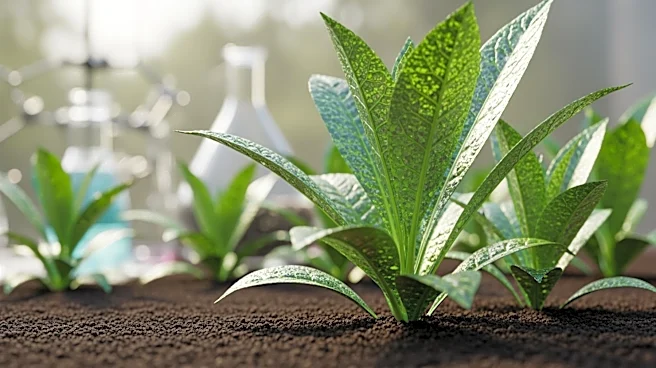
Researchers have been investigating the use of hyperaccumulator plants to extract rare earth elements (REEs) from soils, presenting a sustainable alternative to traditional mining methods. This approach, known as phytomining, involves using specific plants that
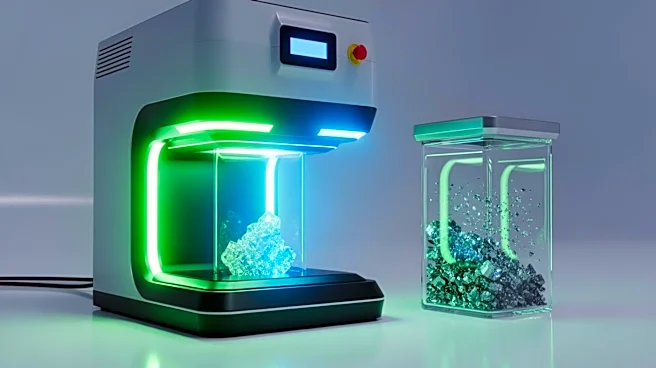
can absorb significant amounts of REEs from the soil into their biomass. The study, published in the journal Communications Earth & Environment, highlights the potential of this method to transform waste sites into productive sources of REEs. The research focused on selecting appropriate plant species, such as Dicranopteris linearis and Phytolacca americana, which have shown high efficiency in accumulating REEs. The process involves harvesting the biomass and using hydrometallurgical techniques to recover rare-earth oxides. This method aims to address the growing demand for REEs, which are crucial for modern technologies like high-strength magnets and LED screens.
Why It's Important?
The significance of this research lies in its potential to provide a more environmentally friendly and sustainable method of extracting rare earth elements, which are essential for various technological applications. Traditional mining of REEs is often associated with significant environmental degradation and high carbon emissions. Phytomining offers a low-carbon alternative that could reduce the environmental impact of REE extraction. Additionally, as global demand for REEs is expected to double by 2050, finding sustainable sources is crucial. This method could also help in rehabilitating degraded lands and converting them into economically viable resources, thus contributing to resource circularity and reducing reliance on conventional mining.
What's Next?
Future steps involve optimizing the phytomining process to increase the concentration of REEs in plant biomass and developing cost-effective recovery methods. Researchers suggest that integrating phytomining with existing land uses and mining rehabilitation could enhance its viability. Further field trials and breeding programs are needed to improve the efficiency of metal crops. International collaboration and support are essential to facilitate the practical application of phytomining. Addressing environmental risks associated with co-accumulated toxic elements will also be crucial for the widespread adoption of this technology.
Beyond the Headlines
Phytomining not only offers a sustainable alternative to conventional mining but also presents socio-economic benefits by potentially integrating into local value chains, especially in regions affected by mining-related land degradation. The approach could play a significant role in future REE supply chains, contributing to a more sustainable and circular economy. However, challenges such as low REE concentrations in biomass and the need for effective recovery methods remain. Multidisciplinary efforts and international cooperation will be key to overcoming these barriers and realizing the full potential of phytomining.