

What's Happening?
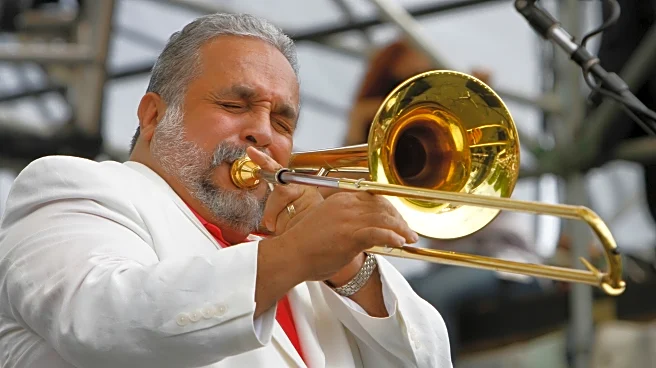
Willie Colon, a pivotal figure in the development of salsa music, has died at the age of 75. His family announced his passing on social media, though no cause of death was provided. Colon was instrumental in shaping the sound of Afro-Caribbean dance music, known
globally as salsa. Born in the Bronx in 1950, Colon was influenced by a mix of R&B, rock, jazz, and Puerto Rican folk music. He began his music career at a young age, signing a recording contract at 16 and releasing his first album with Fania Records at 17. His collaborations with vocalist Hector Lavoe and later Ruben Blades were significant, with albums like 'Siembra' addressing social issues within the Latino community. Colon's music was characterized by a unique trombone-based brass section, setting his band apart from others. Beyond music, Colon was involved in politics, serving as a consultant and adviser to New York City mayors and even pursuing a career in law enforcement later in life.
Why It's Important?
Willie Colon's contributions to salsa music have had a profound impact on the genre and the cultural identity of the Puerto Rican community in New York. His work helped to elevate salsa to international prominence, influencing countless musicians and shaping the sound of Latin music. Colon's ability to blend different musical styles and address social issues through his music resonated with many, making him a cultural icon. His involvement in politics and law enforcement also highlights his commitment to his community and his desire to effect change beyond the music industry. Colon's legacy continues to inspire new generations of musicians and remains a testament to the power of music as a tool for cultural expression and social commentary.
What's Next?
As the music world mourns the loss of Willie Colon, tributes and celebrations of his life and work are likely to follow. His influence on salsa music and the broader Latin music scene will continue to be felt, with his recordings serving as a source of inspiration for future artists. The impact of his political and social contributions may also be revisited, as discussions around his dual career in music and public service emerge. Fans and musicians alike may organize events to honor his legacy, ensuring that his contributions to music and culture are remembered and celebrated.
Beyond the Headlines
Willie Colon's life and career offer a deeper understanding of the intersection between music, culture, and politics. His ability to navigate these worlds highlights the role of artists as cultural ambassadors and agents of change. Colon's music not only entertained but also challenged societal norms and addressed pressing social issues, reflecting the struggles and aspirations of the Latino community. His story underscores the importance of cultural representation and the power of music to transcend boundaries and foster a sense of identity and belonging.