





What's Happening?
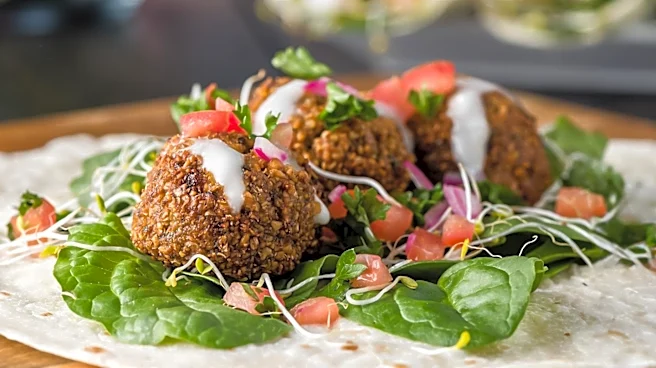
Falafel, a traditional Middle Eastern street food, is gaining popularity in the United States as various restaurants introduce innovative ways to enjoy this dish. Traditionally made from ground chickpeas mixed with herbs and spices, falafel is typically
deep-fried and served in pita bread. However, U.S. eateries are now offering creative variations such as falafel burgers, salads, and sandwiches. For instance, Miznon offers a falafel burger with tangy pickles and green chili peppers, while Noor Mediterranean in Phoenix serves a falafel salad with fresh mint and cherry tomatoes. Pita Jungle in Scottsdale features a Smashed Falafel Grinder, a sandwich with baked falafel and Mediterranean pickles. These adaptations highlight the versatility of falafel and its integration into American culinary culture.
Why It's Important?
The growing popularity of falafel in the U.S. reflects a broader trend of incorporating international cuisines into mainstream dining. This trend not only diversifies the American palate but also supports cultural exchange and understanding through food. Restaurants offering falafel are tapping into the increasing demand for plant-based and vegetarian options, catering to health-conscious consumers and those seeking sustainable food choices. The adaptation of falafel into various forms, such as burgers and salads, demonstrates the flexibility of traditional dishes to meet contemporary tastes and dietary preferences. This culinary evolution can lead to increased business opportunities for restaurants and food producers specializing in Mediterranean cuisine.
What's Next?
As falafel continues to gain traction in the U.S., more restaurants may explore innovative ways to incorporate it into their menus. This could include fusion dishes that blend falafel with other culinary traditions or the development of new recipes that highlight its nutritional benefits. Additionally, the popularity of falafel could encourage more food entrepreneurs to enter the market, potentially leading to the establishment of new eateries focused on Mediterranean and Middle Eastern cuisine. Consumer interest in diverse and healthy food options is likely to drive further experimentation and expansion in this sector.
Beyond the Headlines
The rise of falafel in the U.S. dining scene also underscores the importance of cultural representation in food. As more Americans become familiar with Middle Eastern flavors, there is an opportunity to foster greater appreciation and understanding of the region's culinary heritage. This trend may also influence food education and culinary training programs, encouraging chefs to explore and incorporate global cuisines into their repertoires. Furthermore, the popularity of falafel could inspire discussions about food authenticity and the balance between traditional recipes and modern adaptations.