
What's Happening?
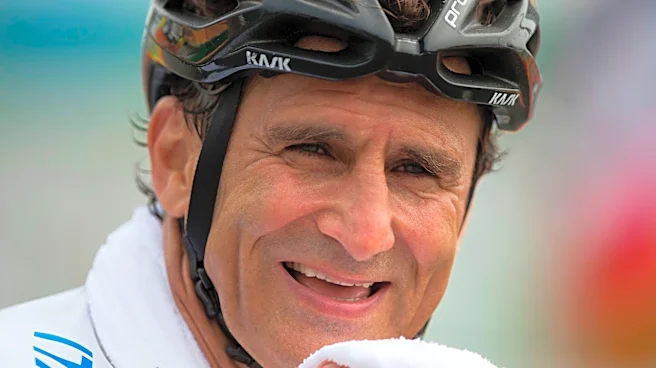
Alex Zanardi, the Italian auto racing champion and Paralympic gold medalist, has passed away at the age of 59. His family announced his death, stating that he died peacefully surrounded by loved ones.
Zanardi's career was marked by two significant accidents, including a 2001 crash that resulted in the loss of both his legs and a 2020 handbike accident that left him with severe injuries. Despite these challenges, Zanardi achieved remarkable success, winning four gold medals and two silvers at the Paralympics, competing in the New York City Marathon, and setting an Ironman record. His resilience and determination made him a beloved figure in the sports world.
Why It's Important?
Zanardi's story is one of extraordinary resilience and inspiration. His ability to overcome life-altering challenges and achieve success in both auto racing and Paralympic sports has made him a symbol of hope and determination. His achievements have not only inspired athletes but also individuals facing their own personal challenges. Zanardi's legacy extends beyond sports, as he demonstrated the power of the human spirit to triumph over adversity. His passing is a significant loss to the sports community and those who admired his courage and tenacity.
What's Next?
The sports world is expected to honor Zanardi's legacy through tributes and moments of silence at various events. His funeral will be held in Padua, and the Italian Olympic Committee has called for a minute of silence at all sports events in Italy over the weekend. Zanardi's story will continue to inspire future generations of athletes and individuals facing challenges, as his life exemplified the strength and resilience needed to overcome adversity.
Beyond the Headlines
Zanardi's life and career highlight the broader themes of resilience and the human capacity to adapt and thrive despite significant setbacks. His ability to design his own prosthetics and return to competitive sports after his 2001 accident showcases innovation and determination. Zanardi's story also underscores the importance of support systems, as his family and the sports community played crucial roles in his recovery and success. His legacy will likely influence discussions on disability, sports, and the potential for human achievement.