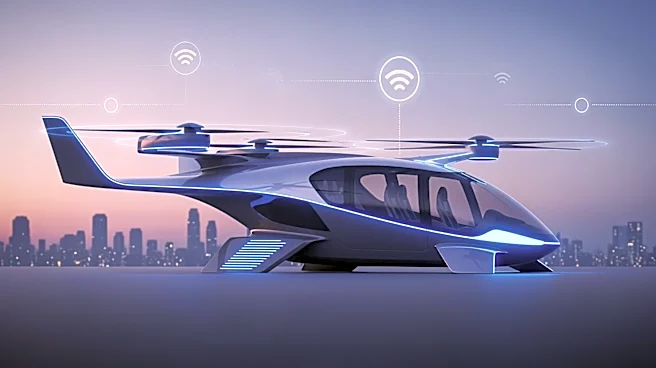








What's Happening?
Archer Aviation is preparing to launch its electric air taxi service by 2026, marking a significant milestone in the urban air mobility sector. The company has been selected to participate in the White House's eVTOL Integration Pilot Program, which is a collaborative
effort with the Department of Transportation (DOT) and the Federal Aviation Administration (FAA). This program will allow Archer to operate passenger-carrying flights in Florida, New York, and Texas. Archer's CEO, Adam Goldstein, likens this development to the 'Waymo moment' for air taxis, suggesting that the service will become a routine part of urban transportation. Archer has made significant progress in the FAA's Type Certification process, having completed Phase 3 and advancing in Phase 4, which involves demonstrating compliance with airworthiness requirements.
Why It's Important?
The introduction of electric air taxis by Archer Aviation could revolutionize urban transportation, offering a new mode of travel that reduces congestion and emissions in major cities. The regulatory support from the White House and FAA indicates a strong governmental push towards integrating advanced air mobility solutions. This development could pave the way for widespread acceptance and adoption of air taxis, similar to the evolution of self-driving cars. The successful implementation of this service could also stimulate economic growth by creating new jobs in the aviation and technology sectors, while also enhancing the efficiency of urban transportation networks.
What's Next?
Archer Aviation plans to begin passenger-carrying flights later this year in selected states as part of the eVTOL Integration Pilot Program. The company is also preparing for its role as the official air taxi provider for the LA28 Olympics, which will provide a significant public platform to showcase its technology. As Archer continues to advance through the FAA's certification process, it will likely focus on building public trust and acceptance of air taxis through safe and reliable operations. The success of these initial flights could influence regulatory frameworks and public policies related to urban air mobility.