





What's Happening?
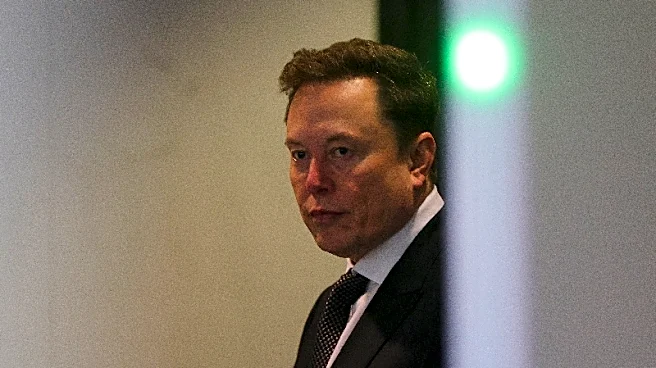
Tech billionaires, including Peter Thiel and Elon Musk, are advocating for the development of artificial intelligence (AI) despite growing public concerns about its potential to eliminate jobs. Thiel, co-founder of Palantir, has downplayed fears, suggesting
that AI is necessary to avoid economic stagnation. Musk has proposed that AI will lead to significant productivity gains and economic abundance, suggesting that universal high income could mitigate job losses. However, critics, including Bernie Sanders, warn that AI could displace millions of jobs and exacerbate economic inequality. The debate highlights a divide between tech leaders' optimistic projections and public apprehension about AI's societal impact.
Why It's Important?
The discourse around AI's impact on employment and the economy is crucial as it could reshape the U.S. labor market and economic landscape. Proponents argue that AI will drive innovation and efficiency, potentially lowering costs and creating new industries. However, the potential for widespread job displacement raises concerns about economic inequality and the creation of a new underclass. Policymakers and industry leaders must address these challenges to ensure that AI's benefits are equitably distributed and that adequate safety nets are in place for those affected by technological advancements.
What's Next?
As AI continues to advance, the U.S. may need to implement policies to mitigate its negative impacts, such as job training programs, wage insurance, and universal health coverage. The debate over AI's role in society is likely to intensify, with calls for regulatory measures to protect workers and ensure ethical AI deployment. The outcome of this debate could influence future legislation and the direction of AI development in the U.S., impacting industries, workers, and the broader economy.
Beyond the Headlines
The ethical implications of AI, including privacy concerns and the potential for increased surveillance, are significant. As AI becomes more integrated into various sectors, it could alter power dynamics between employers and employees, with AI being used to monitor and control productivity. The societal shift towards AI-driven economies may also necessitate a reevaluation of work-life balance and the distribution of wealth generated by technological advancements.