







What's Happening?
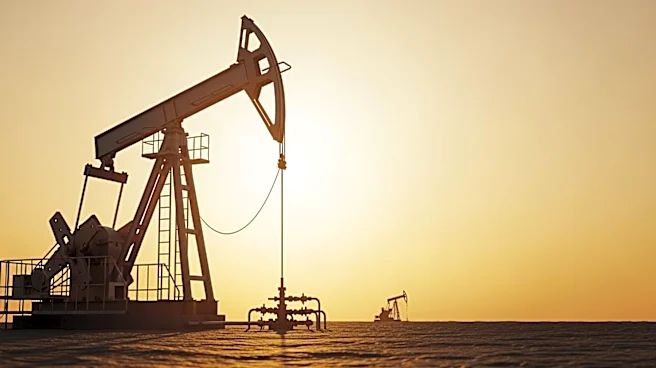
Texas Railroad Commissioner Wayne Christian has announced significant growth in Texas's oil production, highlighting a rise in drilling activity and employment in the upstream sector. According to Baker Hughes, the number of active U.S. oil-directed drilling rigs
increased by 10 to 425 last week, with all gains occurring in Texas. This marks the largest weekly increase in over four years, underscoring Texas's leadership in upstream production growth. The Texas Independent Producers and Royalty Owners Association (TIPRO) reported that Texas's upstream oil and natural gas employment rose by 400 jobs in April, following a gain of 1,800 jobs in March. This trend reflects a broader economic boost, with the state's oil and natural gas industry generating over $1.715 billion in oil production tax revenue from January to April 2026. Natural gas production taxes contributed an additional $773 million, funding essential state services such as education and infrastructure.
Why It's Important?
The increase in Texas's oil production and employment is a significant indicator of the state's economic health and energy sector resilience. As demand for energy rises, Texas's ability to meet this demand through increased production and job creation strengthens its position as a leader in the U.S. energy market. The revenue generated from oil and gas production taxes plays a crucial role in funding public services, highlighting the sector's importance to the state's economy. This growth also reflects the effectiveness of pro-growth energy policies in supporting the state's infrastructure and workforce, ensuring Texas can continue to power its rapidly growing economy.
What's Next?
As Texas continues to experience growth in its oil and gas sector, further increases in drilling activity and employment are anticipated. This could lead to more significant economic benefits for the state, including increased tax revenues and job opportunities. Stakeholders, including policymakers and industry leaders, may focus on sustaining this growth by advocating for policies that support energy production and infrastructure development. Additionally, the state's ability to meet rising energy demands will be crucial in maintaining its economic momentum and supporting its growing population and industries.