


What's Happening?
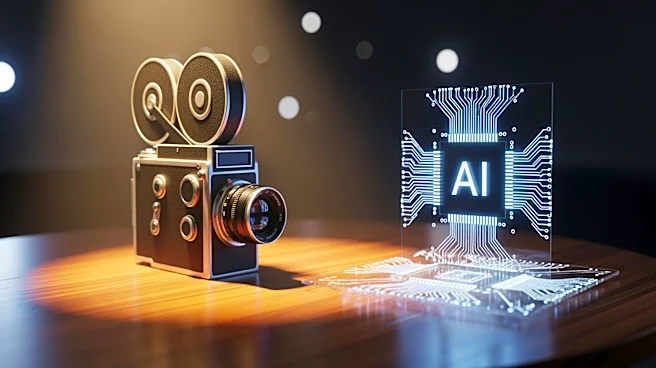
Sandra Bullock, a prominent figure in Hollywood, has expressed her support for the integration of artificial intelligence (AI) within the film and television industry. Speaking at the CNBC Changemakers Summit, Bullock emphasized the necessity for industry professionals
to 'lean into' AI, acknowledging its potential to be used constructively and creatively. She highlighted the importance of understanding and observing AI, while also cautioning against its misuse. Bullock's comments come in response to AI-generated trailers for the anticipated sequel 'Practical Magic 2,' in which she stars alongside Nicole Kidman. The discussion around AI in Hollywood is gaining momentum, with Warner Bros Motion Pictures Co-Chair and CEO Pam Abdy also acknowledging the excitement and potential that AI brings, despite some reservations.
Why It's Important?
The endorsement of AI by influential figures like Sandra Bullock signifies a pivotal moment for the entertainment industry, which is increasingly exploring technological advancements. AI's role in content creation could revolutionize how films and series are produced, potentially reducing costs and increasing efficiency. However, it also raises concerns about intellectual property rights, job displacement, and ethical considerations. The Screen Actors Guild - American Federation of Television and Radio Artists (SAG-AFTRA) has already shown support for a policy framework that addresses these issues, indicating a need for legislative action to balance innovation with protection of creative rights. The industry's approach to AI could set precedents for other sectors grappling with similar technological shifts.
What's Next?
As AI continues to permeate the entertainment industry, stakeholders are likely to engage in further discussions about its implications. The development of comprehensive policies and guidelines will be crucial to ensure that AI is used ethically and beneficially. Industry leaders, including studios and unions, may collaborate to establish standards that protect creative rights while fostering innovation. The response from audiences and creators to AI-generated content will also play a significant role in shaping the future of AI in Hollywood. Ongoing dialogue and adaptation will be necessary as the industry navigates this transformative period.