
What's Happening?
The Global AgTech (Agricultural Technology) and Advanced Food Technologies Market Report 2026-2036 has been released, providing a comprehensive analysis of the evolving agricultural technology landscape.
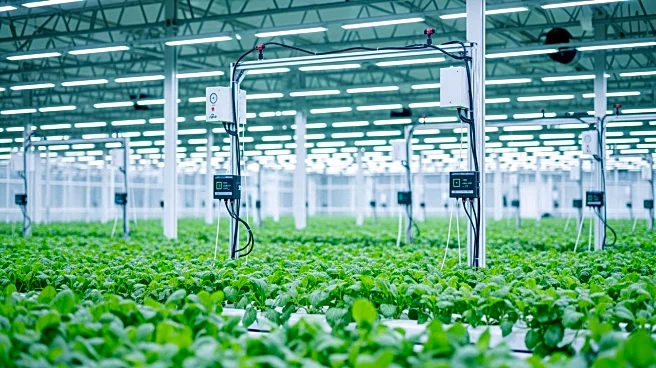
The report highlights the rapid growth in the agritech market, driven by digital transformation and the adoption of precision farming tools, IoT sensors, and data analytics. These technologies aim to optimize crop yields while reducing costs and environmental impact. The report also notes significant venture capital investment in agricultural startups, focusing on vertical farming, crop biotechnology, smart farming solutions, and alternative protein ventures. Detailed market sizing and forecasts are provided, covering major agritech segments and geographic regions, including North America, Europe, Asia-Pacific, Latin America, and the Middle East and Africa.
Why It's Important?
The report underscores the importance of technological advancements in agriculture, which are crucial for addressing global food security challenges. As the demand for food production increases and arable land becomes scarce, innovations in agritech offer sustainable solutions to enhance productivity and resource efficiency. The adoption of smart farming technologies, such as robotics and AI, is transforming traditional farming practices, leading to more efficient and environmentally friendly operations. Additionally, the development of alternative proteins and advanced food technologies is reshaping the food industry, offering new opportunities for growth and investment. These advancements have the potential to significantly impact the U.S. agricultural sector, influencing policy decisions and market dynamics.
What's Next?
The report suggests that the agritech market will continue to evolve, with ongoing advancements in technology and increased investment driving further growth. Stakeholders in the agricultural sector, including policymakers, investors, and farmers, are likely to focus on integrating these technologies to improve efficiency and sustainability. The regulatory environment will play a critical role in shaping the adoption of new technologies, particularly in areas such as gene editing and alternative proteins. As the market expands, companies will need to navigate these regulatory challenges while capitalizing on emerging opportunities in precision farming, vertical farming, and smart agriculture.