





What's Happening?
The 2026 NFL Draft is spotlighting several college football players who are expected to exceed their draft positions. Among these prospects is Carson Beck, a quarterback from Miami and Georgia, known for his accuracy and leadership in high-pressure situations.
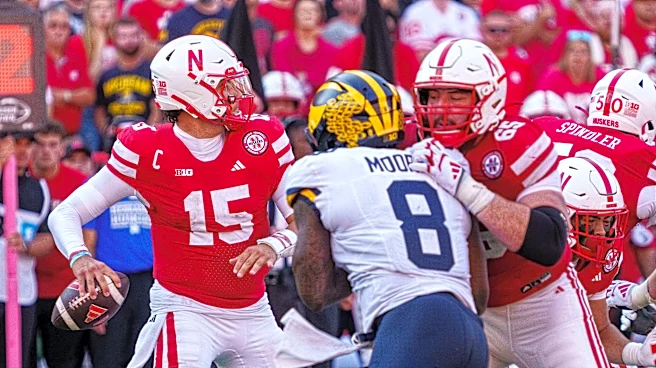
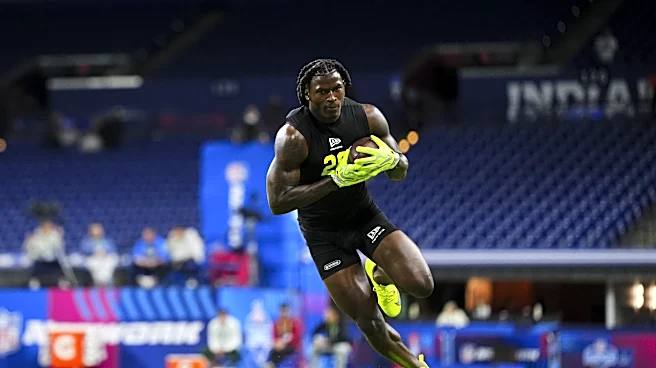
Beck's experience and polished skills in pro-style offenses make him a strong candidate for a successful professional career. Other notable prospects include Emmett Johnson, a running back from Nebraska, and Malachi Fields, a wide receiver from Notre Dame. Johnson's impressive college performance is overshadowed by a slower 40-yard dash time, while Fields' size and ball skills make him a valuable asset despite concerns about his speed. These players, along with others like Blake Miller, an offensive tackle from Clemson, and Cashius Howell, an edge rusher from Texas A&M, are expected to make significant impacts in the NFL despite not being top draft picks.
Why It's Important?
The focus on these 'Plant the Flag' prospects highlights the importance of evaluating players beyond traditional metrics like size and speed. These athletes demonstrate that performance, leadership, and adaptability can be more indicative of future success than physical attributes alone. For NFL teams, identifying such talent can lead to acquiring valuable players at a lower draft cost, potentially transforming team dynamics and performance. This approach also underscores the evolving nature of scouting, where a player's potential impact is assessed through a broader lens, considering their ability to perform in critical moments and adapt to professional play styles.
What's Next?
As the draft approaches, teams will continue to assess these prospects, weighing their potential contributions against perceived shortcomings. The players' performances in pre-draft events and interviews will be crucial in shaping their draft positions. Teams may also consider how these athletes fit into their existing rosters and schemes, potentially leading to strategic draft decisions. The outcomes of these evaluations could influence draft strategies, with teams possibly prioritizing players who demonstrate resilience and leadership over those with purely physical advantages.