




What's Happening?
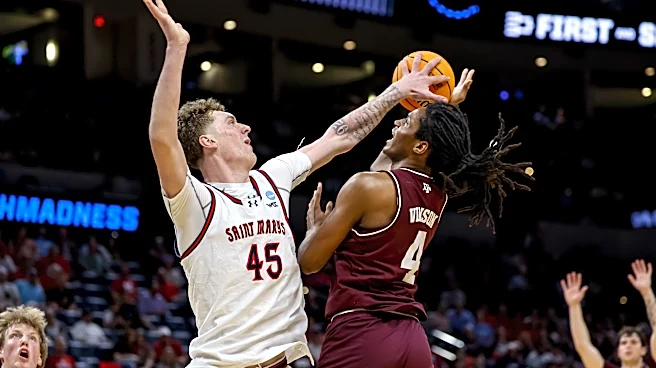
Pryce Sandfort, a standout basketball player for the Nebraska Cornhuskers, has decided to return to college for another season instead of entering the NBA draft. Sandfort, known for his exceptional 3-point shooting, played a pivotal role in Nebraska's
successful season, which included their first NCAA Tournament win and a Sweet 16 appearance. After transferring from Iowa, Sandfort had a breakout season, earning All-Big Ten second-team honors and leading the team with an average of 18.1 points per game. His performance also placed him first in the Big Ten and fourth nationally for 3-pointers per game. Despite interest from NBA teams, Sandfort has chosen to continue developing his skills at Nebraska, aiming to solidify his legacy and prepare for a future professional career.
Why It's Important?
Sandfort's decision to return to Nebraska is significant for both the player and the team. For Sandfort, it provides an opportunity to further hone his skills and increase his draft stock for future NBA considerations. For Nebraska, retaining a key player like Sandfort boosts their prospects for the upcoming season, potentially leading to further success in the NCAA Tournament. This decision also highlights a growing trend among college athletes who opt to stay in school to improve their game and education, rather than immediately pursuing professional opportunities. This can have broader implications for college sports, as it may influence other athletes to consider similar paths, thereby impacting team dynamics and the competitive landscape of college basketball.
What's Next?
With Sandfort's return, Nebraska will likely focus on building a strong team around him to capitalize on their recent success. Coach Fred Hoiberg and the team will aim to leverage Sandfort's skills and leadership to achieve deeper runs in future tournaments. Additionally, Sandfort's decision may inspire other players to evaluate their own career paths, potentially leading to more athletes choosing to stay in college longer. This could affect recruitment strategies and the overall competitiveness of college basketball programs across the nation.