What's Happening?
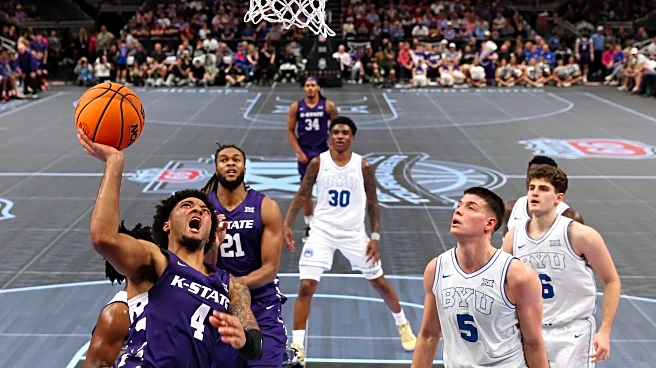
The Big 12 Conference has introduced a new glass floor for its men's and women's basketball tournaments, held at the T-Mobile Center in Kansas City, Missouri. This innovative surface, produced by ASB GlassFloor, has been previously used in the NBA All-Star
Game and European competitions but is making its debut in an official U.S. tournament. The floor features an aluminum and steel spring-action design, intended to mimic the flexibility of traditional hardwood, and includes LED panels for displaying graphics and advertisements. Players and coaches have noted the floor's unique characteristics, such as its slickness and different traction compared to standard courts. While some appreciate the visual appeal and technological advancements, others have expressed concerns about the floor's slipperiness, which has led to players slipping during games.
Why It's Important?
The introduction of the glass floor represents a significant technological advancement in sports venues, potentially setting a precedent for future tournaments and games. The floor's ability to display dynamic graphics and advertisements could open new revenue streams for sports organizations. However, the mixed reviews highlight the challenges of balancing innovation with player safety and performance. The feedback from players and coaches will be crucial in determining whether such floors become more widespread in the future. The Big 12's decision to use this floor could influence other conferences and leagues to consider similar upgrades, impacting the sports industry and its approach to integrating technology into traditional settings.
What's Next?
The Big 12 Conference is likely to gather feedback from players, coaches, and officials to assess the overall impact of the glass floor. Depending on the feedback, adjustments may be made to improve traction and safety. Other sports organizations will be watching closely to see how the floor performs and whether it enhances the viewing experience without compromising player safety. If successful, this could lead to broader adoption of similar technologies in other sports venues, potentially transforming the way games are presented and experienced by fans.