





What's Happening?
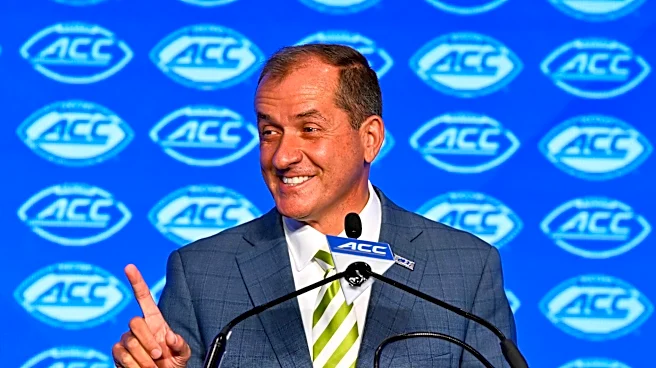
During the ACC's spring meetings, a new agreement between Duke men's basketball and Amazon to broadcast three nonconference games sparked discussions among athletics directors. ACC Commissioner Jim Phillips expressed full support for Duke's innovative
approach to generating revenue through this deal. The agreement involves broadcasting games against UConn, Gonzaga, and Michigan on Amazon Prime Video, marking Amazon's entry into college basketball broadcasting. While ESPN and the ACC were involved in the negotiations, the deal raised concerns about media rights packages. Big Ten Commissioner Tony Petitti expressed dissatisfaction, particularly regarding Michigan's inclusion in the package, suggesting revenue sharing with his conference. Duke's athletics director, Nina King, noted that Michigan was informed from the start, but acknowledged potential repercussions from Petitti's response.
Why It's Important?
This development is significant as it highlights a shift in how college sports media rights are managed, potentially setting a precedent for other schools to monetize nonconference games. The deal could influence future negotiations and partnerships between universities and streaming services, impacting traditional broadcasters like ESPN. The involvement of a major streaming platform like Amazon indicates a growing interest in college sports, which could lead to increased revenue opportunities for schools. However, it also raises questions about the distribution of media rights and revenue sharing among conferences, potentially leading to conflicts similar to the one between the ACC and Big Ten.
What's Next?
The situation may lead to further discussions among conferences about media rights and revenue sharing, especially as more schools explore similar deals. The response from the Big Ten and Michigan's potential withdrawal from the game could influence future negotiations. Other schools may follow Duke's example, seeking innovative ways to leverage their nonconference games for additional revenue. This could result in a reevaluation of existing media rights agreements and potentially reshape the landscape of college sports broadcasting.