






What's Happening?
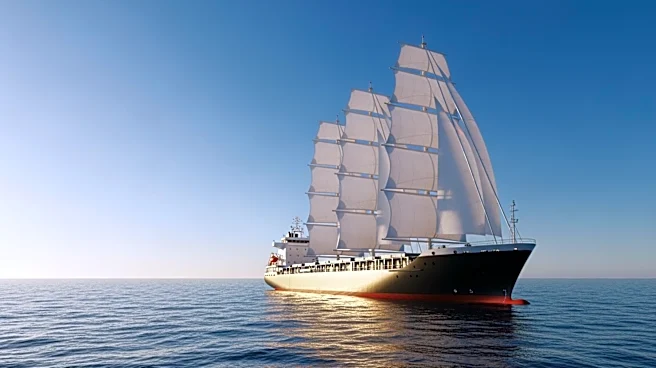
The global fleet of cargo ships equipped with wind propulsion technology has surpassed the 100-vessel milestone, collectively representing over five million tons of deadweight cargo carrying capacity. This development signifies a significant shift in the maritime
industry towards decarbonization, as wind propulsion is increasingly adopted as a viable solution for reducing carbon emissions. The fleet includes over 230 individual wind propulsion systems, which are currently saving more than 100,000 tons of CO2 annually. The adoption of wind propulsion technology has accelerated, with the number of vessels doubling year-on-year. This trend highlights the growing acceptance of wind energy as a mainstream solution in the shipping industry, with tankers and bulk carriers leading the adoption.
Why It's Important?
The milestone of 100 wind-powered cargo ships is a critical step in the maritime industry's efforts to reduce its carbon footprint. As global shipping accounts for a significant portion of greenhouse gas emissions, the adoption of wind propulsion technology offers a practical and scalable solution to mitigate environmental impact. The reduction of over 100,000 tons of CO2 annually by these vessels demonstrates the potential for significant environmental benefits. This shift not only aligns with global decarbonization goals but also positions the shipping industry as a leader in sustainable practices. The increased adoption of wind propulsion could influence regulatory frameworks and encourage further investment in green technologies across the maritime sector.
What's Next?
The continued expansion of wind propulsion technology in the shipping industry is expected to drive further innovation and investment. As more ship owners and operators recognize the benefits of wind energy, the number of wind-powered vessels is likely to grow. This could lead to advancements in wind propulsion systems, making them more efficient and cost-effective. Additionally, regulatory bodies may introduce incentives or mandates to encourage the adoption of sustainable technologies, further accelerating the transition. The success of wind propulsion in the maritime sector could also inspire other industries to explore renewable energy solutions, contributing to broader efforts to combat climate change.