




What's Happening?
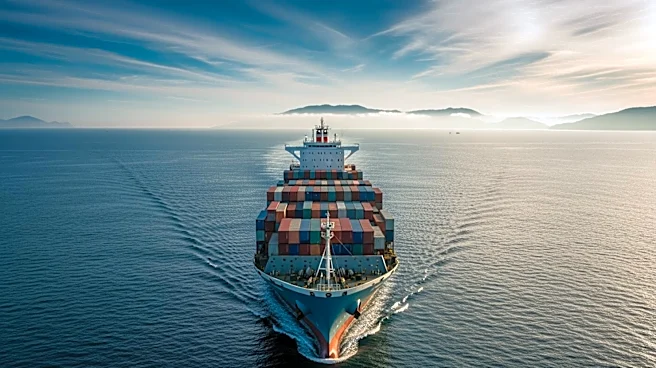
Hyundai has announced a significant change in its shipping routes to avoid the blocked Strait of Hormuz, opting instead to navigate around the Cape of Good Hope. This decision, as stated by Hyundai's Chief Executive José Muñoz, marks a pivotal shift in global
supply chain strategies, with the company acknowledging the end of globalization as it was previously known. The rerouting will add 10 to 15 days to transit times for components shipped from South Korea to Europe, a critical market for Hyundai and Kia, which together sourced 82.8% of their sales from South Korean plants in 2025. The blockade has forced Hyundai to consider sourcing parts in Europe, aligning with potential EU regulations that may require local sourcing for a significant portion of electric vehicle components. Despite these challenges, Hyundai has maintained production by utilizing inventory buffers and is reviewing long-term solutions to mitigate the impact of the blockade.
Why It's Important?
The rerouting of Hyundai's shipping routes underscores the fragility of global supply chains and the significant impact geopolitical tensions can have on international trade. The decision highlights the automotive industry's vulnerability to disruptions in critical supply routes, which can lead to increased costs and delays. For Hyundai, the extended transit times could affect its ability to meet demand in Europe, potentially leading to higher prices for consumers. The situation also emphasizes the need for diversification in supply chains, as reliance on a single route or region can pose substantial risks. The potential shift towards European sourcing could have broader implications for the automotive industry, influencing manufacturing strategies and regulatory compliance. This development is a reminder of the interconnectedness of global markets and the importance of strategic planning to navigate geopolitical uncertainties.
What's Next?
Hyundai is exploring long-term solutions to address the challenges posed by the Hormuz blockade. The company is considering sourcing parts in Europe, which could align with upcoming EU regulations requiring local sourcing for electric vehicle components. This shift could lead to increased investment in European manufacturing facilities and supply chains. Additionally, Hyundai's decision to maintain production levels by utilizing inventory buffers suggests a strategic focus on resilience and adaptability. The company may continue to evaluate its supply chain strategies to mitigate future disruptions. As geopolitical tensions persist, other automakers may also reassess their supply chain dependencies and explore alternative routes or sourcing options. The situation highlights the need for ongoing monitoring of geopolitical developments and proactive measures to ensure supply chain stability.