

What's Happening?
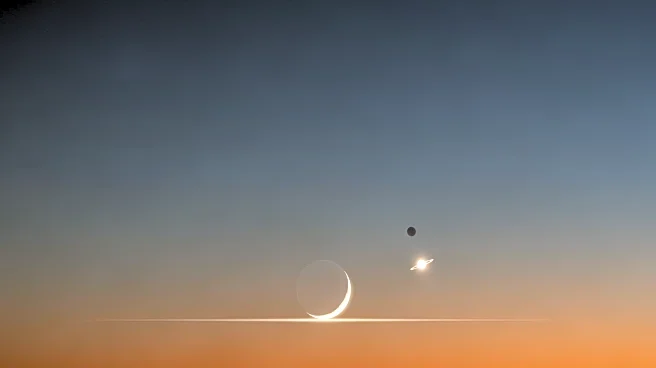
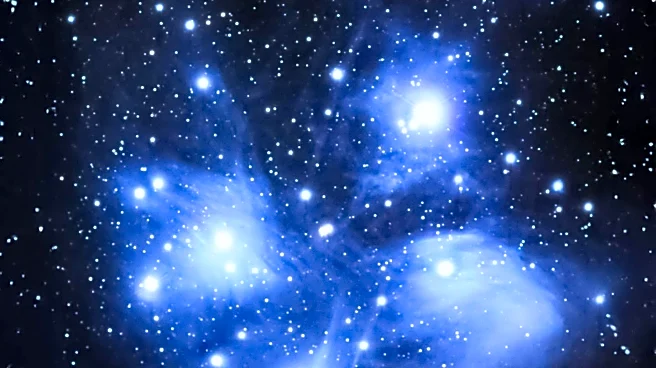
This week, the Moon will pass through the outskirts of the Pleiades star cluster, offering a unique celestial event for sky watchers. The event will occur as the Moon reaches its First Quarter phase, providing an opportunity to observe the Moon's interaction with the star cluster. The International Occultation Timing Association provides details on the timing of the occultation, which varies by location. Observers can use planetarium programs to chart the event from their specific locations. The Moon's proximity to the Pleiades will allow for the observation of stars disappearing and reappearing as they are occulted by the Moon.
Why It's Important?
This celestial event is significant for both amateur and professional astronomers as it provides a rare opportunity
to observe the interaction between the Moon and a prominent star cluster. Such events can enhance public interest in astronomy and provide educational opportunities for those interested in learning more about celestial mechanics and the night sky. The event also highlights the importance of timing and location in astronomical observations, as the visibility of the occultation will vary depending on the observer's geographic position. This underscores the dynamic nature of celestial events and the need for precise observation techniques.
What's Next?
Following this event, astronomers and sky watchers will continue to monitor other celestial occurrences, such as planetary alignments and meteor showers. The data collected from this event may contribute to ongoing research in astronomy, particularly in understanding the dynamics of star clusters and their interactions with other celestial bodies. For the general public, this event may spark increased interest in stargazing and participation in local astronomy clubs or events.