






What's Happening?
The agricultural robots market is anticipated to grow significantly, reaching an estimated value of $193.9 billion by 2035. This growth is driven by several factors, including labor shortages, increasing global food demand, and the adoption of smart farming
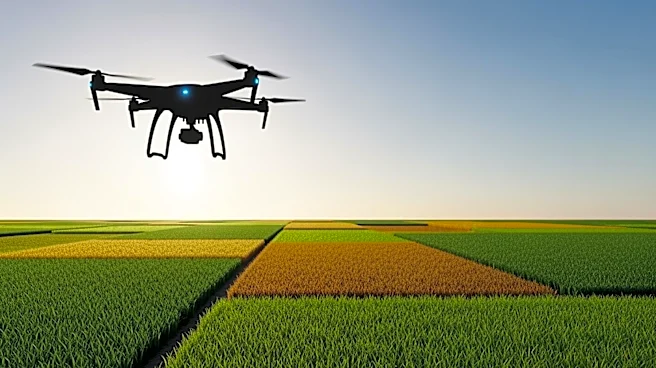
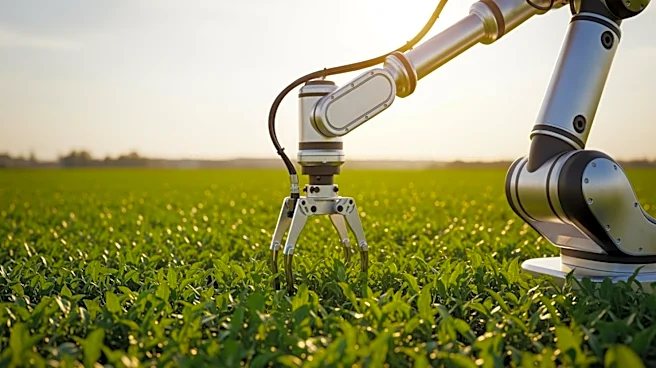
practices. The market, which was valued at $20.3 billion in 2025, is expected to expand at a compound annual growth rate (CAGR) of 25.30% from 2026 to 2035. Agricultural robots, which include autonomous and semi-autonomous systems, are designed to perform various farming activities such as planting, harvesting, and monitoring crops. These robots utilize advanced technologies like artificial intelligence, sensors, and GPS to enhance productivity and precision in farming. Recent developments in the industry include the acquisition of Monarch Tractor's assets by Caterpillar, signaling a trend towards consolidation in the agricultural robotics sector.
Why It's Important?
The projected growth of the agricultural robots market is significant for several reasons. Firstly, it addresses the critical issue of labor shortages in the agricultural sector, which has been exacerbated by demographic changes and urbanization. By automating labor-intensive tasks, these robots can help maintain and potentially increase agricultural productivity. Secondly, the integration of AI and other advanced technologies in farming practices supports the shift towards more sustainable and efficient agricultural methods. This is crucial in meeting the rising global food demand while minimizing environmental impact. The expansion of this market also presents opportunities for technological innovation and economic growth, particularly in regions with strong research and development capabilities.
What's Next?
As the agricultural robots market continues to grow, further consolidation is expected, with major agricultural equipment manufacturers likely to acquire more robotics and AI companies to enhance their product offerings. Additionally, ongoing advancements in AI and automation technologies will likely lead to the development of more sophisticated and versatile agricultural robots. Stakeholders, including policymakers and industry leaders, may focus on creating supportive regulatory frameworks and investing in research to foster innovation in this field. The continued collaboration between academic institutions and industry players will be essential in driving technological advancements and addressing challenges such as cost and accessibility.