
What's Happening?
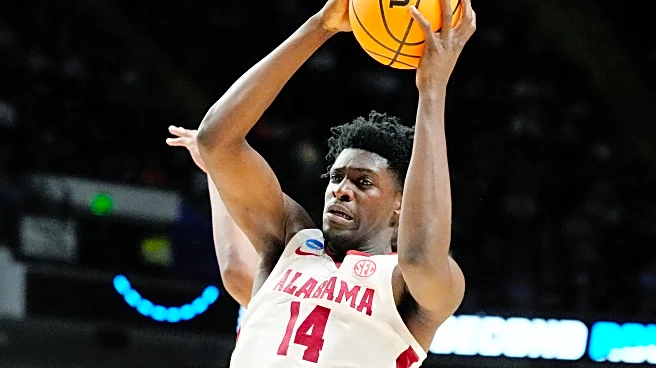
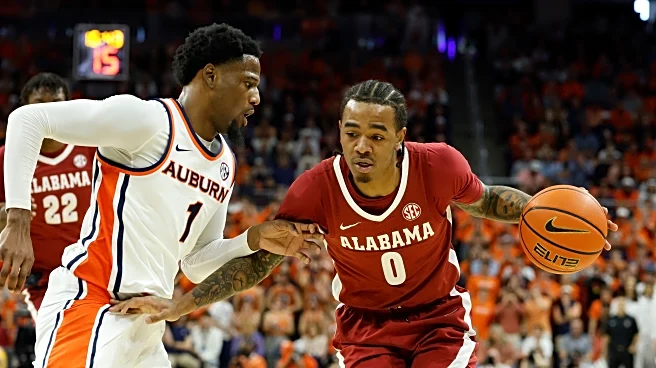
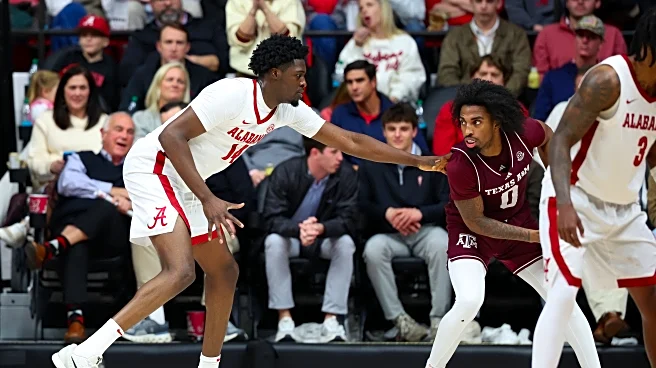
A Tuscaloosa County Circuit Court judge has granted a temporary restraining order allowing Charles Bediako, a former Alabama basketball player, to rejoin the team for the remainder of the 2025-26 season.
Bediako, who played for Alabama during the 2022-23 season, signed a professional contract after not being selected in the 2023 NBA Draft. He has since been involved with various G League teams but has not played in a regular-season NBA game. The NCAA has stated it does not support players who have signed NBA contracts returning to college basketball. Bediako's legal team argues that he would miss out on financial and other benefits if not allowed to play. A hearing for a preliminary injunction is scheduled for January 27.
Why It's Important?
This case highlights the evolving landscape of college athletics, particularly concerning player eligibility and compensation. The NCAA's stance against allowing players with professional contracts to return to college sports underscores the tension between traditional eligibility rules and the new opportunities for athletes to earn compensation. The outcome of this case could set a precedent for future cases involving athletes who wish to return to college sports after pursuing professional opportunities. It also raises questions about the balance between maintaining amateurism in college sports and adapting to the changing dynamics of athlete compensation.
What's Next?
The upcoming hearing on January 27 will be crucial in determining whether Bediako can continue playing for Alabama beyond the temporary restraining order. The decision could influence NCAA policies and the legal framework surrounding athlete eligibility. Stakeholders, including the NCAA, universities, and athletes, will be closely monitoring the case, as it may impact future eligibility rules and the broader discussion on athlete compensation in college sports.
Beyond the Headlines
This case may prompt a reevaluation of NCAA eligibility rules, especially in light of the increasing opportunities for athletes to earn compensation through name, image, and likeness (NIL) deals. The legal battle could also influence how universities and athletic programs navigate the complexities of athlete contracts and eligibility, potentially leading to more flexible policies that accommodate the evolving sports landscape.