







What's Happening?
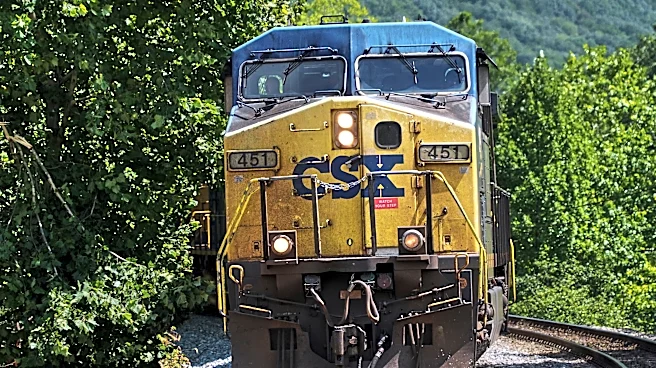
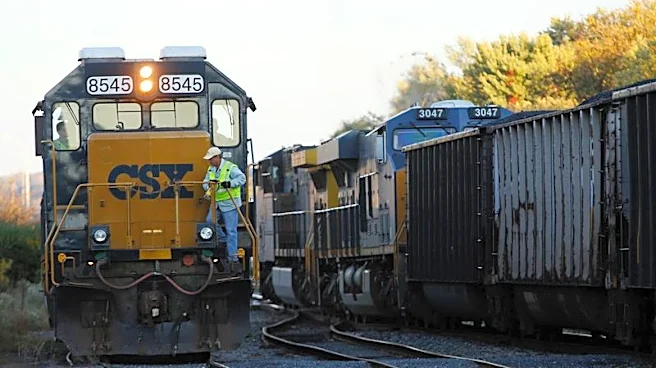
CSX, a major Class I railroad, has increased its revenue outlook for 2026, anticipating mid-single-digit growth due to rising fuel costs and increased rail conversion. The escalation in fuel prices, driven by geopolitical tensions in Iran, has made rail transport
more attractive compared to trucking. Diesel prices have surged to approximately $5.40 per gallon, prompting businesses to consider rail as a cost-effective alternative. CSX's intermodal volumes, which involve transferring freight from trucks to rail, grew by 6% in the first quarter, contributing to a 5% revenue increase. The company expects further volume improvements with the completion of the Howard Street Tunnel project, enhancing transit times between Chicago and Baltimore.
Why It's Important?
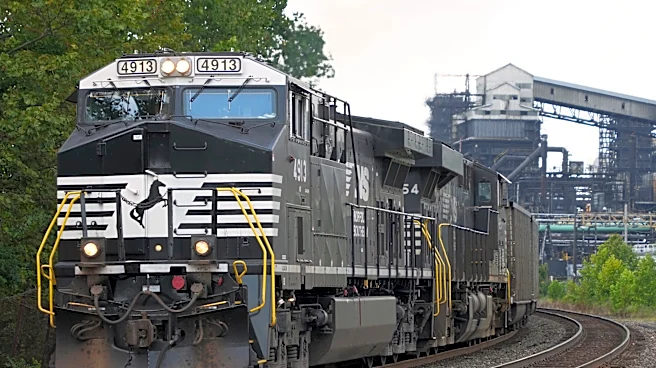
The shift towards rail transport in response to high fuel costs highlights the strategic importance of railroads in the U.S. logistics sector. As businesses seek to mitigate rising diesel expenses, railroads like CSX stand to benefit from increased demand for intermodal services. This trend not only boosts CSX's revenue but also underscores the broader economic impact of fuel price fluctuations on transportation choices. The potential merger between Union Pacific and Norfolk Southern could further reshape the industry, presenting both challenges and opportunities for stakeholders. CSX's proactive adaptation to these dynamics positions it to capitalize on evolving market conditions.
What's Next?
CSX anticipates continued growth in intermodal volumes and revenue, supported by infrastructure projects like the Howard Street Tunnel. The completion of this project is expected to enhance service efficiency and open new routes. Additionally, the proposed merger between Union Pacific and Norfolk Southern, pending regulatory approval, could lead to industry consolidation, affecting competitive dynamics. CSX plans to leverage these developments to expand its market presence and improve operational margins. The company also expects significant contributions from new customer facilities, projected to increase volume by 50% compared to previous projects.