

What's Happening?
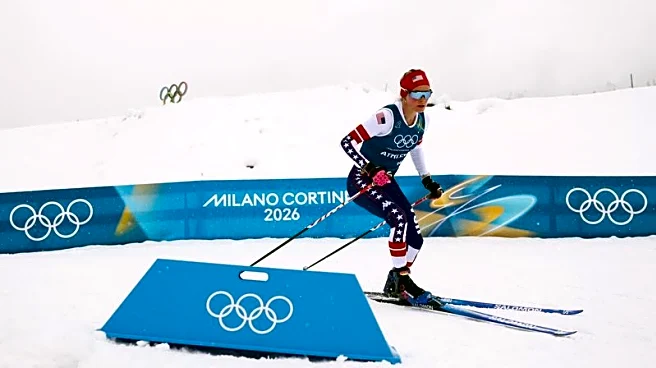
Frida Karlsson of Sweden secured a gold medal in the women's 20-kilometer skiathlon at the 2026 Milan Cortina Olympics. The event, held in Tesero, Italy, featured challenging conditions with energy-draining wet snow. Karlsson completed the race in 53 minutes, 45.2 seconds, outperforming her competitors, including fellow Swede Ebba Andersson and Norway's Heidi Weng. Jessie Diggins, a top-ranked U.S. skier, fell early in the race and struggled to regain her position, ultimately finishing in eighth place. The race marked a historic moment as both men and women competed over an equalized 20-kilometer distance for the first time at the Olympics, switching from classic to freestyle technique mid-race.
Why It's Important?
Karlsson's victory highlights Sweden's dominance
in cross-country skiing, showcasing their ability to perform under challenging conditions. The event also underscores the significance of the Milan Cortina Olympics in promoting gender equality in sports, with equalized race distances for men and women. Jessie Diggins' fall and subsequent struggle reflect the unpredictable nature of competitive skiing and the impact of adverse weather conditions on performance. This development may influence future training and preparation strategies for U.S. athletes, emphasizing the need for adaptability and resilience.
What's Next?
As the Milan Cortina Olympics continue, athletes and teams will likely reassess their strategies to better handle challenging weather conditions. The U.S. team may focus on improving techniques for navigating difficult terrains, while Sweden's success could inspire other nations to enhance their training programs. The equalized race distances may lead to further discussions on gender equality in sports, potentially influencing future Olympic events and policies.
Beyond the Headlines
The Milan Cortina Olympics' decision to equalize race distances for men and women represents a significant step towards gender equality in sports. This change may encourage other sporting events to adopt similar measures, promoting fairness and inclusivity. Additionally, the challenging weather conditions experienced during the skiathlon highlight the importance of environmental considerations in planning and executing international sporting events.