



What's Happening?
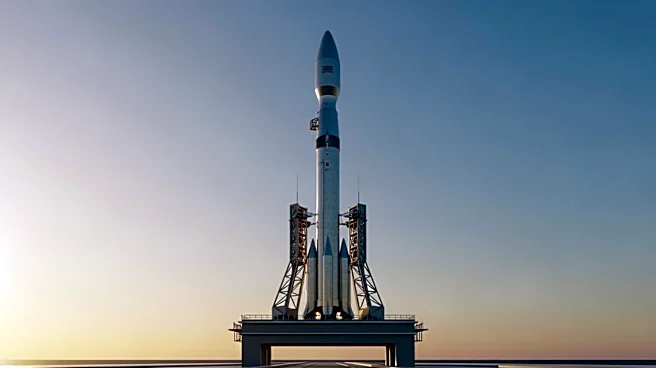
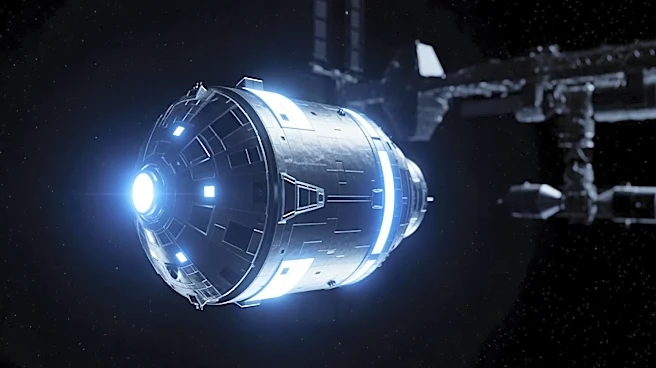
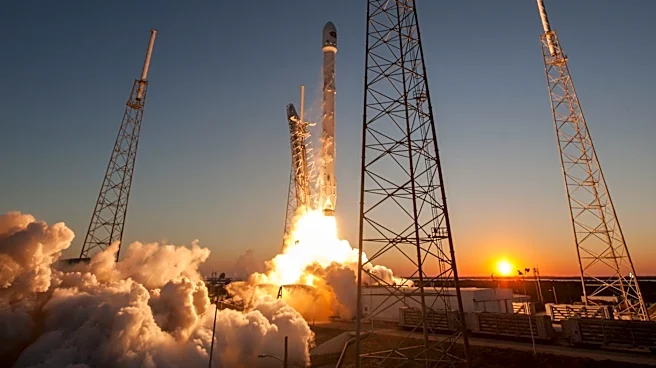
SpaceX has successfully launched its 34th cargo resupply mission to the International Space Station (ISS) using a Dragon capsule that has now completed its sixth trip to orbit. This mission, which took off from Cape Canaveral Space Force Station, marks
a significant milestone in the routine reuse of space hardware. The Falcon 9 rocket, which carried the Dragon capsule, also completed its sixth flight and landing. This achievement highlights the efficiency and cost-effectiveness of SpaceX's approach to space missions, where reuse has become so routine that it no longer garners significant public attention. The mission included delivering experiments to the ISS, such as studies on microgravity simulation and osteoporosis treatments, as well as a joint NASA and U.S. Space Force payload to study charged particles in orbit.
Why It's Important?
The successful reuse of the Dragon capsule and Falcon 9 rocket underscores a transformative shift in the economics of space missions. By making reuse routine, SpaceX has significantly reduced the cost of resupplying the ISS, a critical factor as the station approaches its planned retirement around 2030. This approach not only saves costs but also ensures a reliable supply chain for the ISS, allowing NASA to focus on more precise and impactful research. The ability to reuse capsules and rockets multiple times without treating each mission as a special event represents a major advancement in space technology, setting a new standard for future missions and potentially influencing other space programs to adopt similar practices.
What's Next?
As the ISS nears its retirement, NASA is expected to continue leveraging SpaceX's reusable technology to maximize the remaining operational years of the station. The Dragon capsule's ability to return cargo to Earth intact is particularly valuable for time-sensitive research, which will be crucial as the station's end of life approaches. Future missions will likely continue to focus on high-impact scientific research, supported by the cost savings and reliability provided by reusable spacecraft. Additionally, the success of SpaceX's reusable technology may encourage further investment and development in commercial space ventures, potentially leading to new partnerships and innovations in the industry.