


What's Happening?
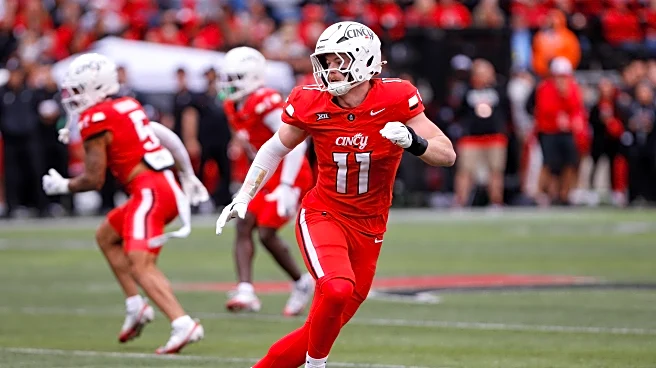
Cincinnati University has filed a lawsuit against its former quarterback, Brendan Sorsby, seeking $1 million in liquidated damages. The lawsuit, filed in the U.S. District Court for the Southern District of Ohio, alleges that Sorsby breached his Name,
Image, and Likeness (NIL) contract with the university by transferring to Texas Tech. According to Cincinnati, Sorsby had committed to play for two seasons under the NIL agreement, which included a clause requiring him to pay a specific amount if he left early. The university claims that Sorsby’s departure has caused substantial harm, as they had invested significantly in him with the expectation of reaping benefits in the 2026 season. Sorsby, who had a successful 2025 season with 2,800 passing yards and 27 touchdowns, reportedly signed a new NIL deal with Texas Tech worth between $4-$6 million for the 2026 season.
Why It's Important?
This lawsuit highlights the complexities and potential legal challenges associated with NIL agreements in college sports. As universities increasingly rely on these contracts to retain talent, the case underscores the financial stakes involved and the potential for disputes when athletes transfer. The outcome could set a precedent for how NIL agreements are enforced and interpreted, impacting future contracts and negotiations. For Cincinnati, enforcing the contract is a matter of protecting its financial and reputational interests, while for Sorsby, the case could affect his career and financial prospects. The situation also reflects broader trends in college athletics, where player mobility and financial incentives are reshaping traditional dynamics.
What's Next?
The legal proceedings will determine whether Cincinnati can enforce the $1 million exit fee. The case may prompt other universities to review and possibly tighten their NIL agreements to prevent similar situations. Stakeholders in college sports, including athletes, universities, and legal experts, will be closely watching the case for its implications on NIL contracts. Depending on the outcome, there could be increased scrutiny and regulation of NIL agreements to ensure clarity and fairness for all parties involved.