

What's Happening?
The future of the Winter Olympics is under threat due to climate change, which is causing a significant reduction in natural snowfall at traditional host sites. A study led by Daniel Scott from the University of Waterloo highlights that by the 2050s,
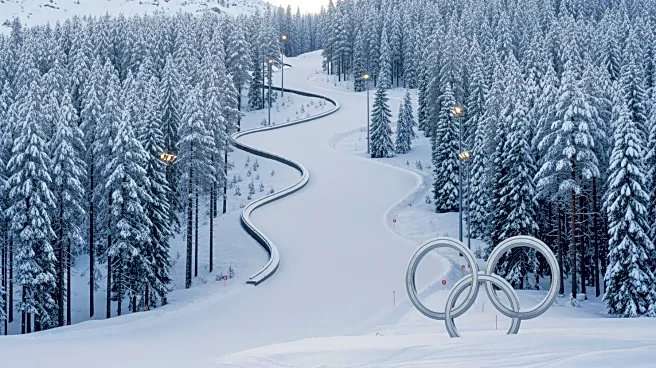
only a few locations will be able to host the Winter Olympics without relying on man-made snow. The 2026 Milan Cortina Olympics already faced challenges with high temperatures and had to use artificial snow extensively. The study, which was initially published in 2024, used climate projection models to assess the future suitability of past and potential Winter Olympic sites. It found that only 52 out of 93 locations could reliably host the Games by mid-century. The International Olympic Committee (IOC) is considering changes to adapt to these conditions, including spreading out venues and increasing the use of artificial snow.
Why It's Important?
The implications of climate change on the Winter Olympics are profound, affecting not only the locations that can host the Games but also the athletes and the sports themselves. As natural snow becomes less reliable, the cost and environmental impact of creating artificial snow increase. This situation could lead to fewer cities being able to host the Games, potentially limiting the global reach and inclusivity of the event. Athletes, particularly those in snow-dependent sports, face uncertain futures as their training and competition conditions become increasingly unpredictable. The broader impact on winter sports could also affect tourism and local economies that rely on winter sports events.
What's Next?
The IOC and other stakeholders are exploring various strategies to mitigate the impact of climate change on the Winter Olympics. This includes potentially moving the Games to higher elevations or more northern locations, increasing the use of artificial snow, and implementing more sustainable practices. There is also a push from athletes and advocacy groups like Protect Our Winters for greater transparency and action on climate commitments. The IOC may need to consider altering the traditional timing of the Games or even the locations to ensure they can continue in a warming world.
Beyond the Headlines
The challenges faced by the Winter Olympics are a microcosm of the broader issues posed by climate change. The need for adaptation and innovation in response to environmental changes is critical not only for the Olympics but for global sports and events. The reliance on artificial snow raises questions about sustainability and the environmental footprint of large-scale events. Additionally, the potential loss of winter sports culture in certain regions could have cultural and social implications, as communities that have historically hosted these events may no longer be able to do so.