






What's Happening?
Charles Yang, the founder and CEO of Vibe, a US-based AI workspace startup, shared insights into his experiences working in startups across China and the United States. Yang, who initially started a gaming company in China, moved to the US to pursue a global
career. He noted that the startup environment in China is less structured compared to the US, where there is a more systematic approach akin to a well-documented software development kit. In China, cultural norms and government direction heavily influence startup operations, whereas in the US, the environment is more individualistic and organic. Yang's journey included leveraging China's supply chain while integrating into the US ecosystem, ultimately leading to the establishment of his current startup, which focuses on AI workspaces.
Why It's Important?
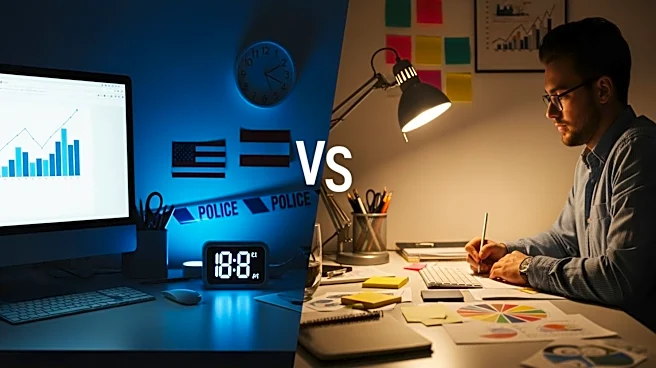
Yang's experiences underscore the contrasting business environments in China and the US, highlighting the challenges and opportunities for entrepreneurs operating in these regions. The structured nature of the US startup scene may offer clearer pathways for growth and innovation, potentially attracting global talent seeking a more predictable business landscape. Conversely, the less structured, relationship-driven approach in China may appeal to those who thrive in dynamic, rapidly changing environments. These differences can significantly impact how startups are founded, funded, and scaled, influencing global business strategies and cross-border collaborations.
What's Next?
Yang's insights suggest that entrepreneurs considering international expansion or collaboration should carefully evaluate the cultural and regulatory landscapes of their target markets. For US-based startups, understanding the nuances of China's business environment could facilitate better integration and partnership opportunities. Similarly, Chinese startups looking to enter the US market may benefit from adopting more structured business practices. As global economic dynamics continue to evolve, startups may increasingly seek to bridge these cultural and operational gaps to enhance their competitive edge.
Beyond the Headlines
The narrative of Yang's career also touches on broader themes of globalization and the shifting centers of innovation. As startups navigate these complex environments, they may contribute to a more interconnected global economy, where ideas and resources flow more freely across borders. This could lead to a blending of business practices, where the strengths of both the US and Chinese systems are harnessed to drive innovation and growth. Additionally, the role of government policies in shaping startup ecosystems remains a critical factor, influencing where and how new ventures emerge.