
What's Happening?
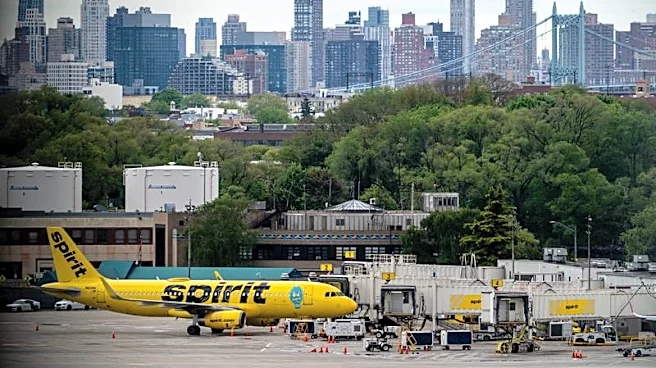
Spirit Airlines has officially ceased operations, marking the end of its three-decade run as a low-cost carrier. The airline faced intense competition from larger rivals and was unable to overcome financial
challenges exacerbated by rising jet fuel prices due to the Iran war. A failed acquisition by JetBlue and an engine defect that grounded many jets further strained the airline. Spirit's bondholders rejected a last-minute bailout proposal from the Trump administration, which would have provided up to $500 million. The shutdown has left 17,000 employees without jobs and disrupted travel plans for thousands of passengers.
Why It's Important?
The closure of Spirit Airlines underscores the fragility of the airline industry, particularly for low-cost carriers that operate on thin margins. The airline's inability to secure a bailout highlights the challenges faced by companies in obtaining government support during financial crises. The shutdown will likely lead to increased fares as competition decreases, affecting consumers who rely on budget travel options. The loss of jobs will have significant economic implications, impacting not only the employees but also the broader communities that depended on the airline's operations.
What's Next?
As Spirit Airlines exits the market, other carriers are stepping in to fill the void, with some capping fares to assist stranded passengers. The airline's bankruptcy proceedings will continue, with efforts to address employee compensation and other financial obligations. The industry may see further consolidation as remaining airlines compete for Spirit's market share. Policymakers and industry leaders will need to consider strategies to support airlines facing similar economic pressures in the future.