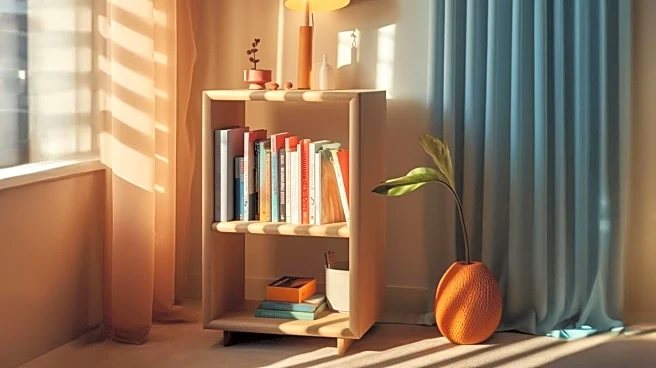

What's Happening?
A 23-year-old woman named Lydia Hansen has gained significant attention on social media for her minimalist lifestyle, showcased through a video tour of her apartment. The video, which has garnered over
558,000 views, highlights her transition from a self-described shopaholic to a minimalist. Hansen's apartment features minimal furniture and belongings, reflecting her commitment to reducing physical and mental clutter. She attributes her lifestyle change to feeling overwhelmed by excess possessions, which she realized contributed to mental clutter. Hansen's approach includes delaying purchases, following a cost-per-use rule, and gradually decluttering. Her minimalist journey has reportedly improved her well-being, providing her with more energy and peace.
Why It's Important?
The growing interest in minimalism, as exemplified by Hansen's story, reflects a broader societal shift towards simplicity and mindfulness. This lifestyle change can have significant implications for consumer behavior, potentially reducing impulsive buying and promoting sustainable consumption. As more individuals adopt minimalism, industries such as retail and home goods may need to adapt to changing consumer preferences. Additionally, the mental health benefits associated with minimalism, such as reduced anxiety and increased peace, highlight the potential for this lifestyle to contribute positively to individual well-being. This trend may encourage more people to evaluate their relationship with material possessions and prioritize experiences over goods.