
What's Happening?
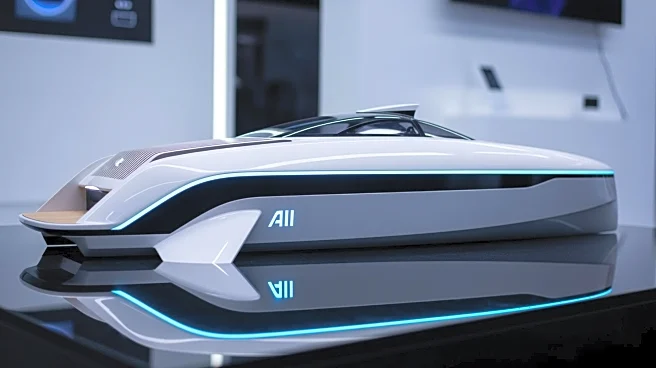
At the Consumer Electronics Show (CES) 2026, Brunswick introduced the Sea Ray SLX 360, a 38-foot autonomous cruising yacht. This innovative vessel is powered by triple Mercury 300 Verado V8 outboards,
delivering a total of 900 horsepower. The yacht features an advanced auto-docking system, which utilizes six stereo cameras and a NVIDIA processor to map its environment. This system allows the boat to analyze wind, wave, and current conditions, plot a course, and execute docking procedures autonomously. The AI-powered system is designed to avoid obstacles such as other boats, swimmers, buoys, and manatees, using 360-degree vision and edge computing. The Sea Ray SLX 360 also includes joystick control, autopilot, and automatic lighting, with the 'AutoCaptain' autonomous technology available as a $70,000 option.
Why It's Important?
The introduction of the Sea Ray SLX 360 represents a significant advancement in marine technology, highlighting the growing trend of autonomy in various transportation sectors. This development could revolutionize the boating industry by enhancing safety and convenience for users, potentially reducing the need for skilled operators. The AI-driven features may also set a new standard for luxury and performance in recreational boating, appealing to high-end consumers. Furthermore, the integration of such technology could spur further innovation and competition among marine manufacturers, leading to broader adoption of autonomous systems in the industry.
What's Next?
As Brunswick continues to develop and refine its autonomous boating technology, the company may explore expanding these features to other models in its lineup. The success of the Sea Ray SLX 360 could encourage other manufacturers to invest in similar technologies, potentially leading to a wider range of autonomous marine vehicles. Additionally, regulatory bodies may need to establish new guidelines and standards to ensure the safe operation of autonomous boats, addressing potential concerns related to navigation and collision avoidance.