






What's Happening?
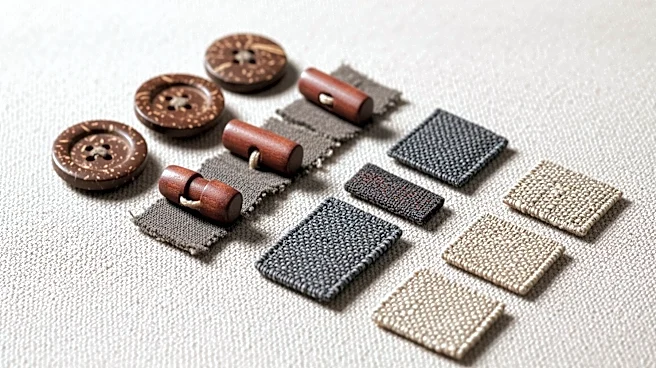
The fashion industry is increasingly focusing on sustainable trims as a key component of circular fashion. Companies like Trimco Group and Harnest are leading efforts to integrate traceability and circularity into garment production. Trimco has partnered
with Retraced to provide a transparency solution that links supplier data to product labeling, enabling better traceability. Meanwhile, Harnest is introducing recycled and biodegradable trims into supply chains, aiming to make circular trims a standard practice. YKK Corporation is also advancing sustainability with its Natulon zipper series, made from recycled materials.
Why It's Important?
The shift towards sustainable trims is crucial for the fashion industry's transition to a circular economy. Trims, which can account for a significant portion of a garment's materials, have historically been overlooked in sustainability efforts. By focusing on these components, the industry can enhance product recyclability and reduce environmental impact. This move aligns with increasing regulatory pressures for transparency and sustainability, such as the Ecodesign for Sustainable Products Regulation. As brands adopt these practices, they can improve their environmental footprint and meet consumer demand for sustainable products.
What's Next?
As the fashion industry continues to embrace sustainable trims, further innovations in materials and traceability technologies are expected. Companies may invest in research and development to create new biodegradable and recyclable materials. Additionally, collaborations between brands, suppliers, and technology providers will be essential to scale these solutions and integrate them into mainstream production. The industry may also see the development of new standards and certifications to ensure the sustainability of trims and other garment components. These efforts will contribute to a more sustainable and transparent fashion industry.