



What's Happening?
The Iranian government has announced that its men's national soccer team is preparing for participation in the 2026 World Cup, which will be held in the United States. This announcement comes amid uncertainties following military tensions involving the U.S.
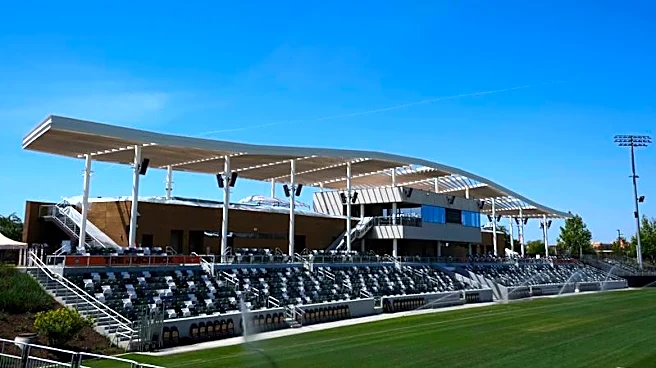
and Israel. Iranian government spokesperson Fatemeh Mohejerani stated that the Ministry of Youth and Sports has confirmed the team's readiness for the tournament. FIFA has maintained that Iran will adhere to the World Cup schedule, despite suggestions to relocate the team's games to Mexico. FIFA President Gianni Infantino recently met with Iranian soccer officials in Turkey, where the team played warmup matches. The Iranian team is scheduled to play group-stage games in Los Angeles and Seattle, with a training camp planned in Tucson, Arizona.
Why It's Important?
This development is significant as it underscores the intersection of sports and international relations, particularly in the context of geopolitical tensions. The participation of Iran in the World Cup hosted by the U.S. highlights the potential for sports to act as a diplomatic bridge, even amidst strained relations. The event also poses logistical and diplomatic challenges, such as securing U.S. entry visas for the Iranian delegation. Successful participation could enhance Iran's international image and foster goodwill, while any disruptions could exacerbate existing tensions. The World Cup itself is a major global event, and Iran's involvement ensures representation from a key Middle Eastern nation, contributing to the tournament's diversity and global appeal.
What's Next?
The next steps involve logistical preparations for the Iranian team's arrival in the U.S., including securing necessary visas and finalizing training camp arrangements. FIFA and Iranian officials will continue to coordinate to ensure compliance with World Cup regulations. The U.S. government will play a crucial role in facilitating the team's entry, which could serve as a diplomatic gesture. The Iranian team's performance and conduct during the tournament will be closely watched, potentially influencing future sports diplomacy and international relations. Additionally, the broader geopolitical context may impact public and media perceptions of Iran's participation.