





What's Happening?
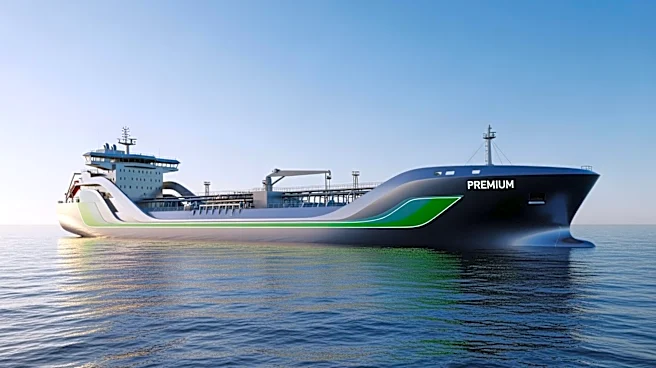
Braskem, a leading polyolefins producer in the Americas, has announced the naming of two new tankers, Beautiful Future and Blooming Future, as part of its fleet modernization efforts. These next-generation chemical and product oil tankers are designed
to transport essential raw materials more efficiently and with a significantly reduced environmental footprint. The vessels were named at a ceremony in China on May 8, 2026. The tankers will primarily transport naphtha, a key component in producing everyday items such as medical supplies and packaging, between the U.S. Gulf Coast and Brazil. The ships incorporate advanced engine technology, energy-saving hull designs, and emissions-control systems that exceed current regulatory requirements, aiming to reduce CO2 emissions by approximately 30% compared to existing vessels.
Why It's Important?
The introduction of these advanced tankers represents a significant step forward in sustainable maritime transportation. By reducing CO2 emissions by an estimated 6,500 tonnes annually, Braskem is contributing to the global effort to lower the environmental impact of shipping. This move aligns with broader industry trends towards sustainability and could set a precedent for other companies in the sector. The reduced emissions are equivalent to eliminating nearly 50,000 one-way flights between Amsterdam and Paris, highlighting the potential environmental benefits. This initiative not only supports Braskem's commitment to sustainability but also enhances its competitive edge in the global market by aligning with increasing regulatory and consumer demands for greener practices.
What's Next?
Braskem plans to expand its fleet further, with two additional ships under construction and scheduled for delivery later in 2026 and early 2027. These developments are part of Braskem's broader strategy to strengthen its position in the global market while adhering to sustainability goals. The company is likely to continue investing in technologies that reduce environmental impact, potentially influencing industry standards and encouraging other companies to adopt similar practices. Stakeholders, including environmental groups and regulatory bodies, will be watching closely to assess the impact of these new vessels on global trade and emissions.