
What's Happening?
Electric vehicle manufacturers such as Rivian, Lucid Motors, and Scout Motors are facing significant challenges due to state dealership-franchise laws in the U.S. These laws, which were established decades
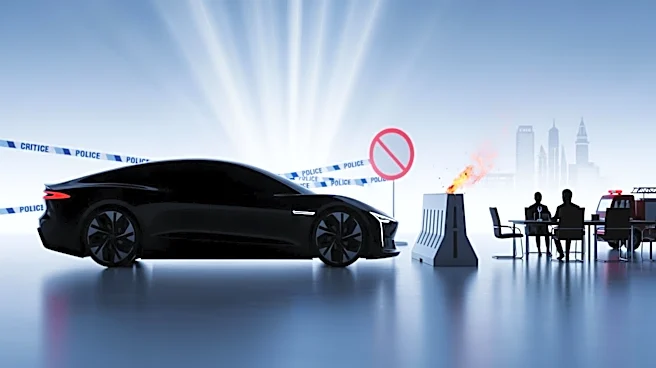
ago, restrict the ability of these companies to sell directly to consumers. Rivian, for instance, has filed a lawsuit against the Ohio Bureau of Motor Vehicles over these restrictions, as they are unable to obtain a dealer license in the state. This means that while they can operate service facilities, they cannot offer test drives or discuss pricing directly with customers. Lucid Motors also faces similar restrictions, being able to sell directly in fewer than half of the U.S. states. Scout Motors, a subsidiary of Volkswagen Group, is planning its sales strategy around these laws, despite having invested heavily in production facilities in states like South Carolina, where direct sales are not permitted.
Why It's Important?
The restrictions imposed by state dealership laws are significant for the EV industry as they hinder the ability of manufacturers to control pricing and educate consumers directly. This can lead to a less efficient sales process and potentially higher costs for consumers. The laws are seen as protective of traditional dealership models, but they pose a barrier to newer companies that do not have established dealer networks. This situation could impact the growth and competitiveness of U.S. EV manufacturers in the global market, as they are forced to navigate a complex legal landscape that varies by state. The outcome of legal challenges, like Rivian's lawsuit in Ohio, could set precedents that affect the entire industry.
What's Next?
The ongoing legal battles and lobbying efforts by EV manufacturers may lead to changes in state laws, potentially allowing for more direct sales models. Companies like Rivian and Lucid Motors are likely to continue advocating for legislative changes that would enable them to sell directly to consumers without the need for third-party dealers. The resolution of these issues could influence the strategies of other automakers and impact the broader automotive market in the U.S. Additionally, as more states consider the economic benefits of supporting EV manufacturing and sales, there may be increased pressure to modernize dealership laws.