








What's Happening?
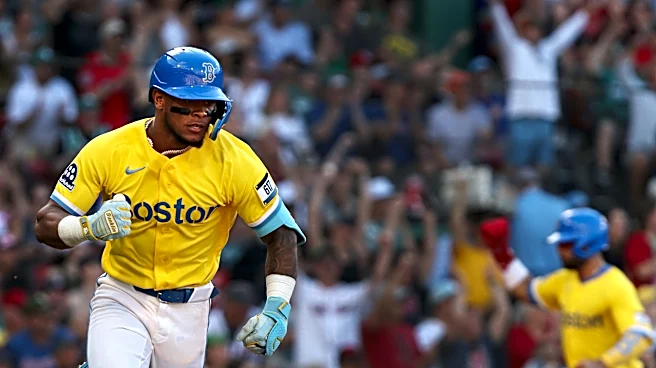
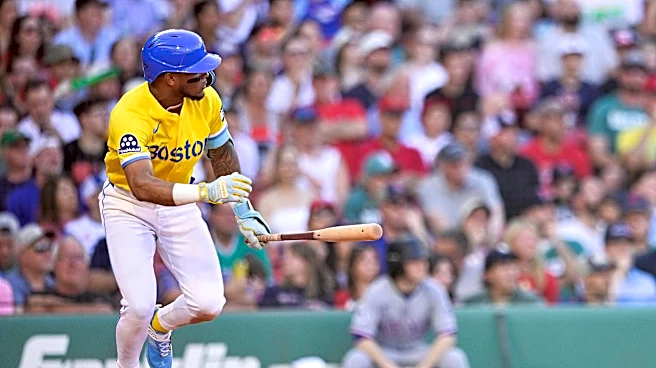
Roman Anthony, a promising player for the Boston Red Sox, is experiencing a challenging sophomore season. After a strong debut in 2025, where he posted impressive statistics and secured an eight-year, $130 million contract, Anthony's performance has declined.
This season, he has struggled with a batting average of .229 and has been sidelined since May due to a partially torn ligament in his right ring finger. This injury, affecting his throwing hand, has raised concerns about his availability for the remainder of the season. The Red Sox, who are currently trailing in the AL Wildcard race, had hoped Anthony would fill the offensive gap left by Alex Bregman's departure. However, his current slump and injury have led to criticism that the team may have prematurely relied on his potential.
Why It's Important?
Anthony's struggles highlight the risks associated with investing heavily in young talent based on early success. The Red Sox's decision to extend Anthony's contract was a strategic move to secure a future star, but his current performance and injury issues underscore the uncertainty in player development. This situation impacts the team's competitiveness, as they are already facing challenges in the AL Wildcard race. The Red Sox's reliance on Anthony reflects broader trends in Major League Baseball, where teams often gamble on young prospects to build long-term success. The outcome of Anthony's situation could influence future decisions regarding player contracts and development strategies across the league.
What's Next?
The Red Sox will need to make critical decisions as the trade deadline approaches, potentially seeking additional talent to bolster their lineup. Anthony's recovery and return to form will be closely monitored, as his performance could significantly impact the team's playoff aspirations. The Red Sox may also reevaluate their approach to nurturing young talent, considering the balance between immediate performance and long-term potential. Fans and analysts will watch how the team navigates these challenges, which could set precedents for handling similar situations in the future.