



What's Happening?
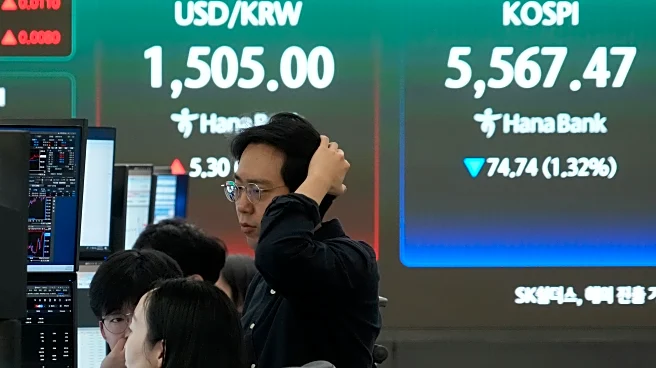
The stock market has experienced significant volatility over the past month, largely due to geopolitical tensions following a U.S. and Israel attack on Iran. In response, Iran closed the Strait of Hormuz and targeted U.S. military facilities, leading
to a surge in oil prices. Brent crude has increased by 50% and West Texas Intermediate by 40% over 19 trading sessions. This has resulted in a decline of over 5% in both the S&P 500 and Nasdaq indices. The conflict has heightened fears of inflation and economic slowdown, impacting various sectors, including technology and consumer goods.
Why It's Important?
The ongoing conflict in the Middle East and the resultant spike in oil prices have significant implications for the global economy and U.S. markets. Rising energy costs can exacerbate inflationary pressures, affecting consumer spending and corporate profits. Companies like Nike and Meta Platforms have already seen stock declines due to these economic uncertainties. The situation underscores the interconnectedness of geopolitical events and financial markets, highlighting the need for investors to remain vigilant and adaptable. The potential for prolonged conflict could further strain economic recovery efforts and influence monetary policy decisions.