




What's Happening?
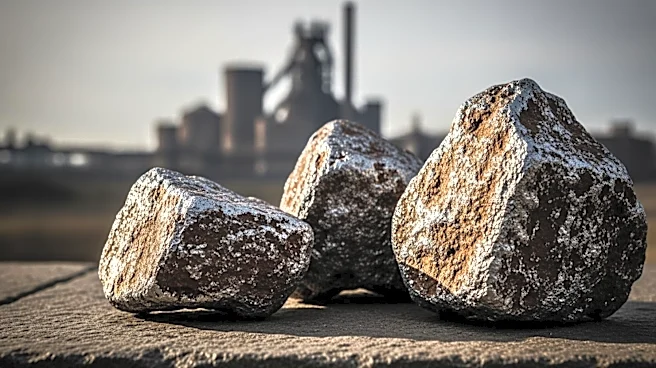
China's iron ore production has decreased by 1% in the first four months of 2026 compared to the previous year, totaling 326.78 million tons. This decline is attributed to a reduction in crude steel output by 4.1% year-on-year, as Chinese steelmakers
produced 331.12 million tons during this period. The decrease in production is linked to weak downstream demand and falling rolled steel prices. Despite the drop in domestic production, China increased its iron ore imports by 8% year-on-year, reaching 418.6 million tons. The report highlights the dynamics of the iron ore industry in China, including demand, supply, and trade flows.
Why It's Important?
The decline in China's iron ore production and steel output reflects broader economic challenges, including reduced demand for steel in both domestic and international markets. This situation impacts global iron ore prices and trade, affecting countries that export iron ore to China. The increase in imports despite lower domestic production suggests a strategic move to maintain supply chains and manage costs. These developments are crucial for stakeholders in the global steel and mining industries, as they influence pricing, trade policies, and investment decisions.
What's Next?
The ongoing trends in China's iron ore and steel production may lead to adjustments in global supply chains and trade policies. Countries exporting iron ore to China might experience shifts in demand, prompting them to explore alternative markets. Additionally, the Chinese government may implement policies to stabilize the steel industry and address the underlying causes of reduced demand. The situation warrants close monitoring by industry analysts and policymakers to anticipate further changes in the global iron ore market.