
What's Happening?
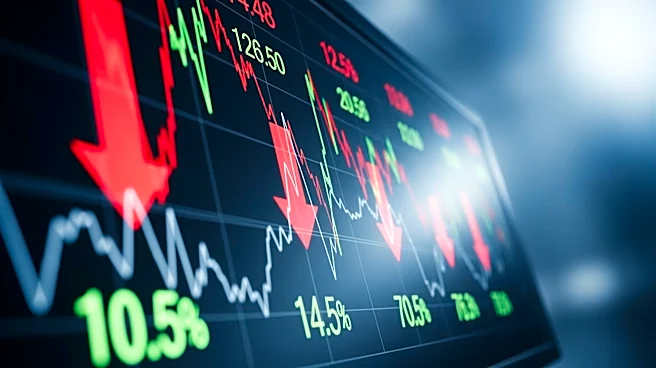
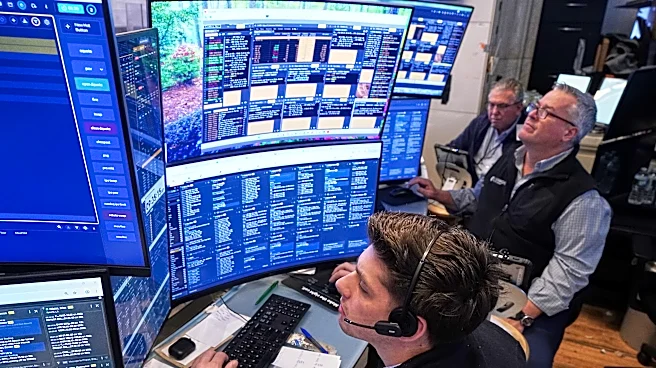
Financial markets experienced a significant downturn following a stronger-than-expected U.S. jobs report, which increased the likelihood of a Federal Reserve interest rate hike. The S&P 500 fell 2.6%,
the Dow Jones Industrial Average dropped nearly 700 points, and the Nasdaq Composite sank 4.2%. The robust jobs data, indicating the addition of 172,000 jobs in May, suggests a resilient economy but also raises concerns about inflation. This has led to a sell-off in both stocks and bonds, as investors anticipate higher borrowing costs and adjust their portfolios accordingly.
Why It's Important?
The potential for an interest rate hike by the Federal Reserve could have widespread implications for the U.S. economy. Higher rates would increase borrowing costs for businesses and consumers, potentially slowing economic growth. The tech sector, which has been a significant driver of market gains, is particularly vulnerable to rising rates due to its reliance on borrowing for expansion. Additionally, higher rates could lead to a decrease in bond prices, affecting fixed-income investors. The market's reaction underscores the delicate balance the Fed must maintain between supporting economic growth and controlling inflation.
What's Next?
Investors and analysts will be closely watching the Federal Reserve's communications for any signals regarding future rate hikes. The central bank's decisions will play a crucial role in shaping market dynamics and investor sentiment. Companies may need to reassess their financial strategies in light of potential changes in monetary policy. The ongoing geopolitical tensions and their impact on energy prices could further influence the Fed's decisions and market conditions.