



What's Happening?
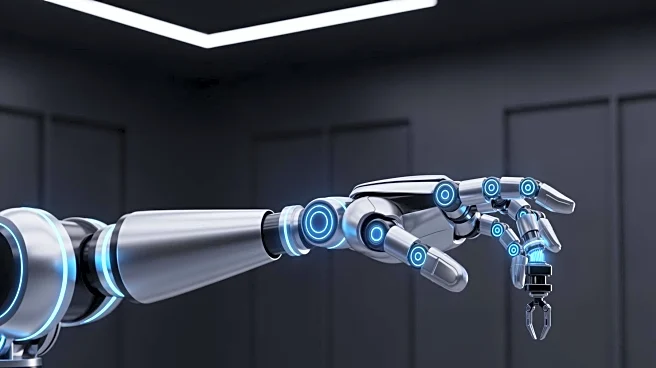
Hyundai Motor Group is leveraging its capabilities to lead the AI robotics industry, as highlighted at CES 2026. The company is collaborating with Boston Dynamics to develop advanced robotics solutions, including the Atlas product model. This robot is designed for industrial work and aims to operate alongside humans, particularly in challenging environments. The partnership focuses on creating robots that can assist with physically demanding tasks, thereby easing human workloads. Hyundai's integrated AI Robotics value chain involves various group affiliates, such as Hyundai Mobis and Hyundai Glovis, which contribute to the development, testing, and mass production of these robots. The initiative is part of Hyundai's broader strategy to expand
its expertise from automotive to robotics, enhancing customer value through robotics-as-a-service (RaaS).
Why It's Important?
The expansion into AI robotics by Hyundai Motor Group signifies a significant shift in the industrial landscape, potentially transforming how industries operate. By integrating robotics into manufacturing and other sectors, Hyundai aims to increase efficiency and safety, reducing the need for humans to perform hazardous tasks. This move could lead to increased productivity and cost savings for businesses, while also addressing labor shortages in certain industries. The collaboration with Boston Dynamics, known for its advanced robotics technology, positions Hyundai as a leader in the AI robotics field, potentially influencing other companies to adopt similar technologies. This development could also spur innovation and competition within the robotics industry, driving further advancements in AI and automation.
What's Next?
Hyundai Motor Group plans to integrate the Atlas robots into its manufacturing systems, with a target of achieving an annual automotive sales goal of 9.8 million units by 2030. The company will continue to develop and refine its robotics solutions, focusing on enhancing the capabilities and reliability of its products. As these robots become more prevalent in industrial settings, there may be increased regulatory scrutiny and the need for new safety standards. Additionally, the adoption of AI robotics could lead to discussions about the future of work and the role of humans in increasingly automated environments. Stakeholders, including policymakers, businesses, and labor organizations, will likely engage in dialogue about the implications of widespread robotics adoption.