


What's Happening?
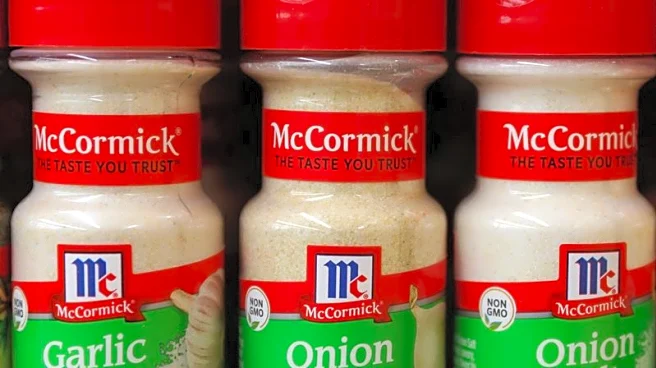
Unilever, a British multinational company, is reportedly considering a significant strategic shift by exiting its food division. This move involves potential merger talks with McCormick & Company, Inc., an American spice and sauce brand. Sources indicate
that these discussions are progressing quickly. The potential spin-off would require Unilever to disentangle complex supply chains and systems, a challenging task given the interconnected nature of its operations. The company's food division includes well-known brands such as Hellmann's and Knorr. If the merger proceeds, it would bring together two major players in the food and beverage industry, combining iconic brands under one roof. This strategic pivot would allow Unilever to focus more on its beauty, wellness, and personal care sectors, where it is already experiencing faster growth.
Why It's Important?
The potential exit of Unilever from the food sector marks a significant shift in the company's strategy and could have wide-reaching implications for the food and beverage industry. By focusing on its beauty and personal care divisions, Unilever aims to capitalize on faster-growing markets. This move could signal a broader industry trend towards specialization and away from the traditional model of large conglomerates managing diverse portfolios. For competitors, this could prompt a reevaluation of their own strategies and portfolios. Retailers might need to adjust their category strategies, and investors could shift their focus to areas with higher growth potential. The merger, if successful, would also demonstrate the complexities involved in integrating large food companies, as seen in past mergers like Kraft Heinz.
What's Next?
If Unilever proceeds with the spin-off, the company will need to carefully manage the transition to avoid disruptions in supply chains and maintain business continuity. The merger with McCormick would require integrating formulations, ingredient suppliers, and manufacturing facilities across different markets. This process could take considerable time and resources. Meanwhile, the food and beverage industry will be closely watching the developments, as a successful merger could set a precedent for future consolidations. Competitors may respond by reassessing their market positions and exploring similar strategic shifts. The outcome of these talks could reshape the competitive landscape, influencing how companies approach growth and specialization in the future.
Beyond the Headlines
The potential exit of Unilever from the food sector highlights a broader trend towards specialization in the industry. As companies focus on their core strengths, the era of sprawling conglomerates may be coming to an end. This shift could lead to more streamlined operations and bolder strategic bets, as companies aim to enhance their competitive edge. The move also underscores the importance of agility and innovation in today's market, where consumer preferences and market dynamics are rapidly evolving. For Unilever, the transition could mean a renewed focus on digital-first branding and connecting with consumers' emotions, particularly in the beauty sector.