







What's Happening?
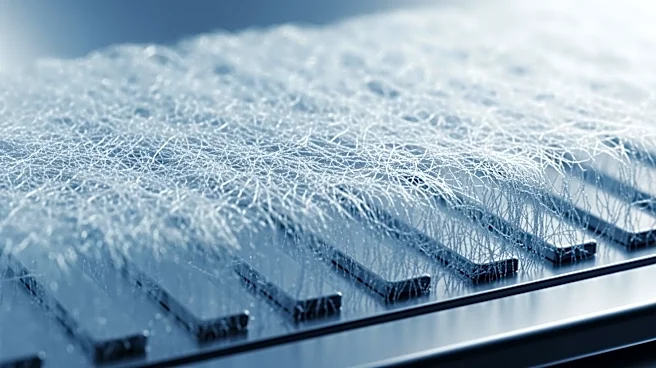
Researchers have developed a new binder for lithium batteries using charge-engineered cellulose nanofibrils (c-CNFs) to replace the traditional polyvinylidene fluoride (PVDF) systems. This new binder addresses environmental concerns associated with PFAS
chemicals and toxic solvents used in PVDF. The c-CNF binder enhances mechanical and electrochemical properties, supporting high-loading lithium battery electrodes. The binder's design involves functionalizing cellulose nanofibrils with quaternary ammonium groups, improving dispersion stability and forming strong hydrogen bonds. This innovation allows for PFAS-free battery electrodes with improved ion transport and structural integrity, offering a sustainable alternative to conventional binders.
Why It's Important?
The development of a sustainable binder for lithium batteries is significant as it addresses both environmental and performance challenges. The use of PFAS-free materials reduces the environmental impact and health risks associated with traditional battery components. This innovation could lead to more sustainable battery production, aligning with global efforts to reduce reliance on harmful chemicals. The improved performance of the c-CNF binder also enhances battery efficiency and longevity, which is crucial for the growing demand for high-performance batteries in various applications, including electric vehicles and renewable energy storage.
What's Next?
The successful implementation of c-CNF binders in commercial battery production could revolutionize the industry by providing a more sustainable and efficient alternative to current technologies. Further research and development may focus on optimizing the binder's properties and scaling up production to meet industrial demands. The adoption of this technology could also drive regulatory changes, encouraging the use of environmentally friendly materials in battery manufacturing. As the demand for sustainable energy solutions grows, innovations like the c-CNF binder will play a critical role in shaping the future of energy storage technologies.