

What's Happening?
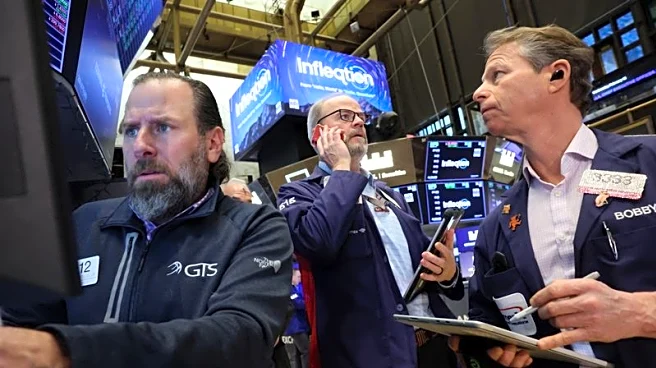
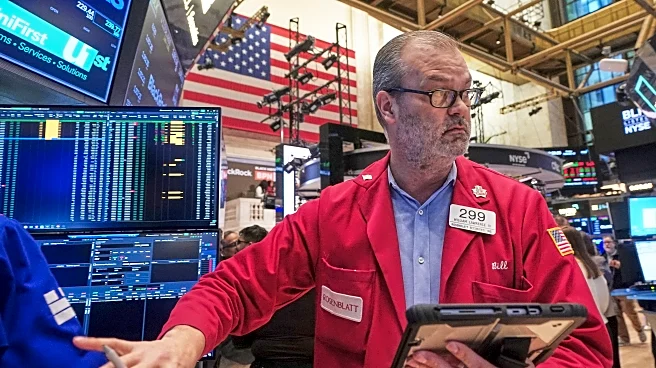
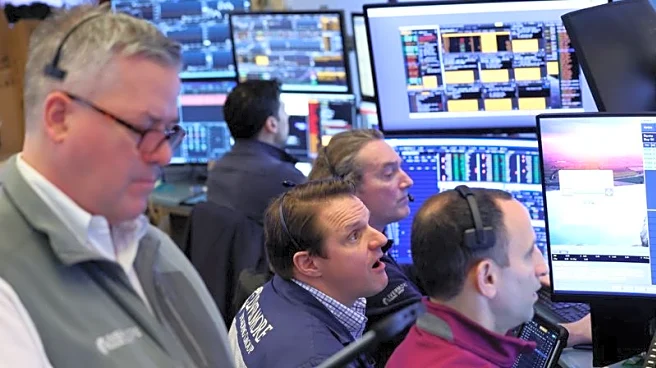
The Federal Reserve's recent meeting minutes reveal a division among officials regarding the future of U.S. interest rates. While most agreed to maintain the current rates, there is a split on whether to prioritize supporting the labor market or controlling inflation. Some officials are open to rate hikes if inflation remains high. This division comes as traders speculate about potential rate cuts in June, although the possibility of rate hikes is also being considered. The stock market responded positively, with major indexes rising, driven by gains in tech stocks like Nvidia and Amazon. Additionally, geopolitical tensions with Iran have influenced oil prices, which saw a significant increase.
Why It's Important?
The Federal Reserve's decisions on interest rates
are crucial for the U.S. economy, affecting borrowing costs for consumers and businesses. The division among officials highlights the complexity of balancing economic growth with inflation control. A potential rate hike could slow economic activity but help manage inflation, while a rate cut might stimulate growth but risk higher inflation. The market's reaction, particularly in tech stocks, indicates investor confidence in the sector's resilience. However, geopolitical factors, such as tensions with Iran, add uncertainty to economic forecasts, impacting energy prices and broader market stability.
What's Next?
The Federal Reserve will continue to monitor economic indicators, particularly inflation and employment data, to guide future interest rate decisions. Traders and investors will closely watch upcoming Fed meetings and statements for any shifts in policy direction. The geopolitical situation, especially regarding Iran, will also be a key factor influencing market dynamics and energy prices. Businesses and consumers should prepare for potential changes in borrowing costs, which could affect investment and spending decisions.