







What's Happening?
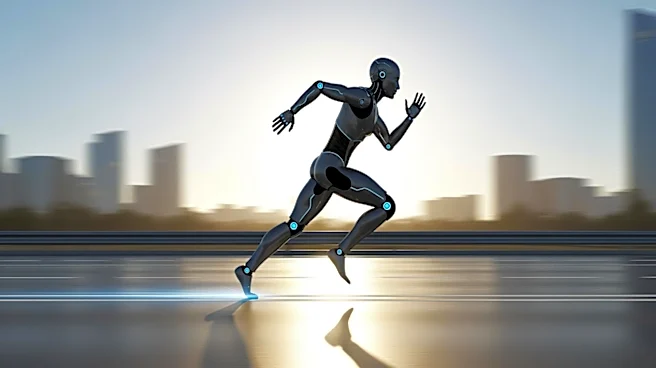
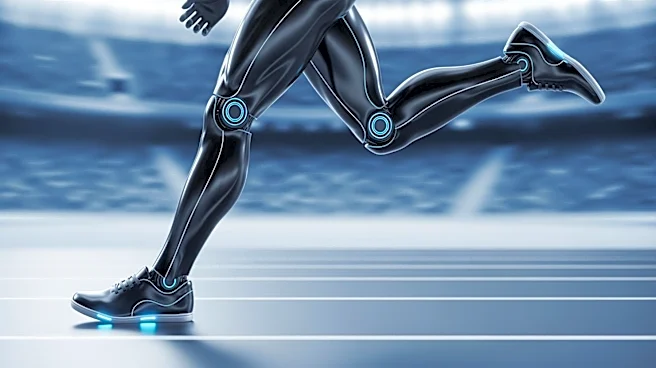
In a groundbreaking achievement, a humanoid robot developed by the Chinese company Honor has completed a half-marathon in Beijing faster than any human competitor. The robot finished the race in 50 minutes and 26 seconds, surpassing the human world record
of 57 minutes and 20 seconds set by Jacob Kiplimo. This event marks a significant milestone in robotics, as it demonstrates the advanced capabilities of humanoid robots in performing tasks traditionally dominated by humans. The robots, using Honor's 'Lightning' model, autonomously navigated the 13-mile course, showcasing their potential in competitive sports.
Why It's Important?
This development highlights the rapid advancements in robotics and artificial intelligence, with potential implications for various industries, including sports and manufacturing. The ability of robots to outperform humans in physical tasks could lead to increased automation in sectors that require precision and speed. In sports, this achievement raises questions about the future of human-robot competitions and the role of technology in athletic performance. The success of these robots also underscores the potential for robotics to enhance human capabilities, offering new opportunities for innovation and efficiency.
Beyond the Headlines
The success of humanoid robots in a half-marathon could spark ethical and regulatory discussions about the role of robots in competitive sports. As robots become more capable, there may be debates about fairness and the definition of athletic achievement. Additionally, the use of robotics in sports could influence public perceptions of technology, potentially leading to increased acceptance and integration of robots in everyday life. This event may also inspire further research and development in robotics, as companies seek to push the boundaries of what robots can achieve.