







What's Happening?
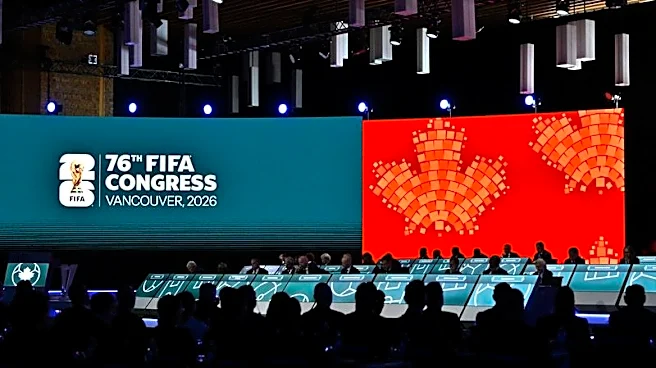
The 2026 FIFA World Cup is set to be the largest in history, featuring 48 nations competing over 39 days across Canada, Mexico, and the United States. This marks the first time the tournament will be hosted by three countries, with 16 venues hosting 104
matches. The tournament will kick off on June 11, 2026, in Mexico City and conclude with the final on July 19, 2026, at the New York New Jersey Stadium. Notably, the tournament will see the debut of teams like Cape Verde, Curacao, Jordan, and Uzbekistan. The format includes a group stage followed by knockout rounds starting with the round of 32, a change from previous editions.
Why It's Important?
The expansion of the FIFA World Cup to 48 teams represents a significant shift in international football, offering more nations the opportunity to compete on the world stage. This change is expected to increase global viewership and engagement, potentially boosting the sport's popularity in regions where football is less dominant. For the host countries, the tournament is anticipated to bring substantial economic benefits, including increased tourism and global exposure. The event also presents logistical challenges, requiring extensive coordination across three countries to ensure smooth operations.
What's Next?
As the tournament approaches, preparations will intensify, with infrastructure developments and logistical planning taking center stage. Host cities will focus on upgrading facilities and transportation networks to accommodate the influx of visitors. FIFA will continue to work with local organizing committees to finalize details, including security measures and fan engagement strategies. The expanded format may also prompt discussions on future World Cup structures and the potential for further expansion.